











MooseDesk is an AI chatbot, live chat and helpdesk app for Shopify, rated 5.0 across 452 reviews and installed on 5,628 stores. You're probably not here to escape a bad app.
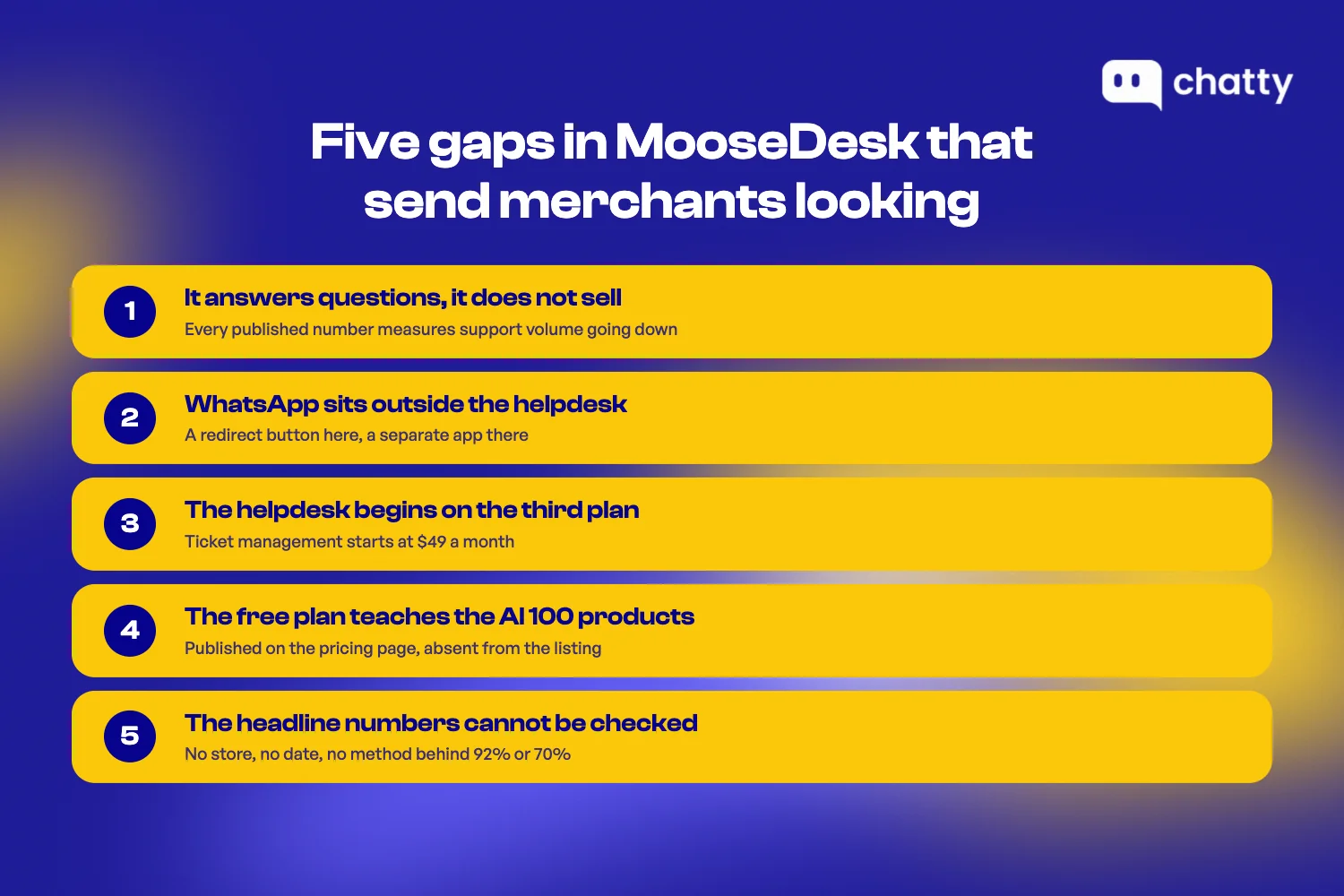
You're here because its headline promises two things and both come apart when you check them. It says it converts, then publishes four numbers that all measure support work and none that measure a sale. It says all-in-one, then keeps WhatsApp out of the helpdesk. Those are the first two of five gaps that come out of checking MooseDesk against its own pages. No single alternative closes all five, so name the gap that bites your store before you compare a single price.
- Nothing on this list closes all five gaps. Name the one that actually bites your store before you compare a single price, because coverage and price do not order the same way.
- All four numbers MooseDesk publishes measure support work. Tickets deflected, self-service rate, seconds to first reply, chats a day. Not one measures a sale, despite "that converts" sitting in its own headline.
- WhatsApp never reaches the MooseDesk helpdesk, while Messenger and Instagram do. It is the split most price comparisons miss, and it decides more shortlists than the monthly figure does.
- Willdesk closes four of the five gaps at $16.90 a month. The widest coverage on this list, matched only by Chatty, with WhatsApp in the inbox, ticketing, cart recovery and 1,000 products of AI training. Check the catalog line though: that same 1,000-product ceiling applies to Basic, not just the free plan.
- Shopify Inbox is free, rates 4.6 across 5,478 reviews and publishes no product cap. It closes one of the five gaps, the catalog ceiling, and no others. For a store under 200 SKUs it's still the right answer.
Why merchants look for MooseDesk alternatives
Almost nobody using MooseDesk is unhappy. Listed as Moose: AI Chatbot & Live Chat by Vegahub Technology, 443 of those 452 reviews are five stars and exactly one sits below four, and StoreLeads has it growing 355% year on year. The reason to leave is fit, not quality. Here is what each gap looks like on MooseDesk's own pages:
- It answers questions, it does not sell. The homepage headline is "All-in-one AI support tool that converts," yet every number it publishes measures support work rather than sales: 92% of tickets auto-resolved, a 70% self-service rate, under 30 seconds to first reply, 12k+ chats a day. No revenue figure, order count or conversion rate appears anywhere, and no proactive outreach or cart recovery appears on any public page, so the AI recommends products when a shopper asks and reaches nobody who has not asked. Vegahub does ship cart recovery, in a second free app that runs outside the helpdesk workspace.
- WhatsApp sits outside the helpdesk. Its features page names live chat, tickets, Instagram and Messenger, but not WhatsApp, which the docs file as a redirect button. Vegahub does ship a real WhatsApp product, but as a separate free app, Moose WhatsApp Chat Button, with its own inbox, so those conversations sit outside the MooseDesk AI, its ticket history and its reporting, while Messenger and Instagram land in the workspace properly.
- The helpdesk begins on the third plan. Ticket management, ticket volume, Shopify order creation and customer syncing are Growth features at $49 a month. Free and Starter carry none of them, and 0 and 1 email channels. A two-person store that wants a shared queue reaches $49 before it has one, and Growth then caps that queue at 300 tickets a month.
- The free plan teaches the AI 100 products. The pricing page publishes the whole ladder, 100, 500, 5,000 and 20,000. The App Store listing publishes none of it, showing only "Unlimited AI chatbot replies" on every tier, which describes how often the AI can speak rather than how much of your store it can speak about. There is nothing between 500 and 5,000, so a store carrying 700 SKUs buys Growth and pays for 4,300 slots it'll never use.
- The headline numbers cannot be checked. Which store, measured when, over how many conversations, and what counts as auto-resolved? None of the four is answered for the 92% figure, the 70% self-service rate or the sub-30-second reply time. That is not unique to MooseDesk, but it does mean you can't tell whether 92% would hold on a catalog like yours.
None of that makes MooseDesk a weak product. It makes it a support tool that's honest about being a support tool everywhere except its own headline.
MooseDesk alternatives compared at a glance
Here are all eleven alternatives, ordered by how many of MooseDesk's five gaps they close. There is one column per gap, so you can rebuild the score yourself rather than take ours. "Partly" does not count as a gap closed, and neither does a capability a vendor markets but does not document. Read the "MooseDesk gaps closed" column first and Entry price second:
| Tool | MooseDesk gaps closed | Sells | WhatsApp in inbox | Ticketing under $49 | Free catalog | Published results | Entry price | Rating / reviews |
| Chatty | 4 of 5 | Yes | Yes | No ticketing | 200 products | Named stores, per-store figures | $19.99/mo | 4.9 / 1,880 |
| Willdesk | 4 of 5 | Yes | Yes | Yes, $16.90 | 1,000 products | None published | $16.90/mo | 4.8 / 355 |
| Tidio | 3 of 5 | Partly | Yes, reply only | Yes | No product cap | None published | $29/mo | 4.8 / 1,247 |
| eDesk | 2 of 5 | Partly | Yes, documented | $39/agent annual | No free plan | None published | $39/agent/mo | 4.8 / 27 |
| Gorgias | 2 of 5 | Partly | Yes | Yes, $10 (50 tickets) | No free plan | None published | $10/mo | 4.2 / 617 |
| Richpanel | 2 of 5 | Yes | Marketed, undocumented | No, $200/mo floor | No free plan | Named stores, per-store revenue | $200/mo floor | 4.7 / 121 |
| Re:amaze | 2 of 5 | Partly | Yes, via Twilio | $29/user | No free plan | None published | $29/user/mo | 4.5 / 142 |
| VanChat | 2 of 5 | Yes | No | No | Unlimited on paid tiers | None published | $19/mo | 4.9 / 92 |
| Chizy | 1 of 5 | No | No, handover only | No | 200 products | None published | $19/mo | 5.0 / 120 |
| Shopify Inbox | 1 of 5 | Partly | No | No | No product cap | None published | Free | 4.6 / 5,478 |
| SmartBot | 0 of 5 | No | No, handover only | No | 80 AI chats and 80 products a month | None published | $10/mo | 4.7 / 428 |
| MooseDesk (baseline) | reference | No | Separate app | From $49 | 100 products | Aggregate percentages only | Free, paid from $19 | 5.0 / 452 |
Nothing here closes all five gaps, which is why naming yours comes before comparing any of these prices. The rest of this guide groups the tools by the gap they close, starting with the one MooseDesk's own headline promises and its product does not deliver, chat that answers and never sells:
MooseDesk alternatives that make chat sell
If you left because chat answers questions and never opens a sale, Chatty and VanChat are your group. Both reach a shopper who has not typed anything yet, which is the capability the MooseDesk helpdesk app does not document. One caveat on the evidence before you read on: Chatty's proactive campaigns are documented feature by feature, while VanChat's are described in its marketing and nowhere we could check, so weigh the two claims differently:
Chatty
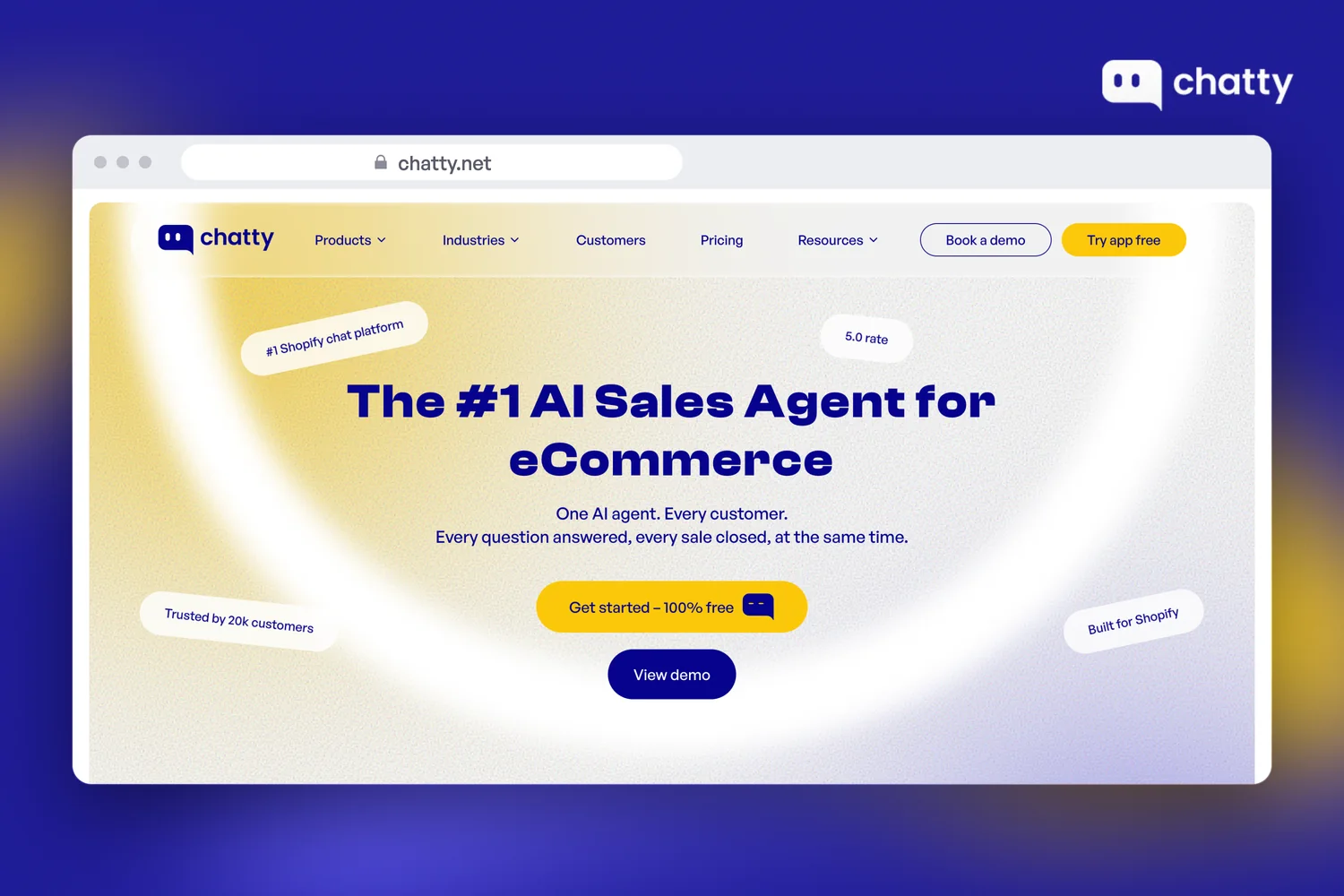
Chatty is built around the sale, not the ticket, and it answers gap 5 the way gap 5 asks to be answered, with named stores on pages you can open. Montana West reports $41,115 in revenue from chat across six months, and Stonehenge Health $75,000 across seven months. You can email either store and ask. Across the whole platform Chatty publishes $61M+ in assisted revenue at a 7.4% chat-to-sale rate, which is a self-reported aggregate and should be read as one.
On gap 1 it ships what MooseDesk does not: behaviour-triggered proactive messages including abandoned cart reminders and cart boosters, with page, audience, device and timing targeting behind them. Proactive engagement and cart recovery sit on Pro at $68.99, so Chatty gates its selling features higher than MooseDesk gates its ticket queue.
Where it stands on the other three gaps:
- WhatsApp is a real inbound channel, connected through a WhatsApp Business account and read in the Chatty inbox, alongside Messenger, Instagram and email. Chatty's roadmap lists AI auto-reply for WhatsApp as released in November 2025.
- It is not a helpdesk. No ticket queue and no SLA policies, though its listing does sell agent analytics. If your bottleneck is a shared queue, Chatty does not solve it.
- Its catalog ladder is close to MooseDesk's at the bottom: 200 products free and 500 on Basic at $19.99, one dollar more than MooseDesk's Starter for the same catalog. It separates higher up, at 8,000 products on Pro for $68.99 and 20,000 on Plus for $199 against MooseDesk's $249.
Plans meter AI conversations as well as products, at 50 a month free, then 100, 500 and 1,000, with extras at $0.40 each. That meter is a real cost to model, and on pure cost per message an unlimited-reply tool is cheaper. It rates 4.9 stars across 1,880 reviews, roughly four times MooseDesk's sample, and runs on Shopify only. The head-to-head detail sits in the Chatty vs MooseDesk comparison.
VanChat
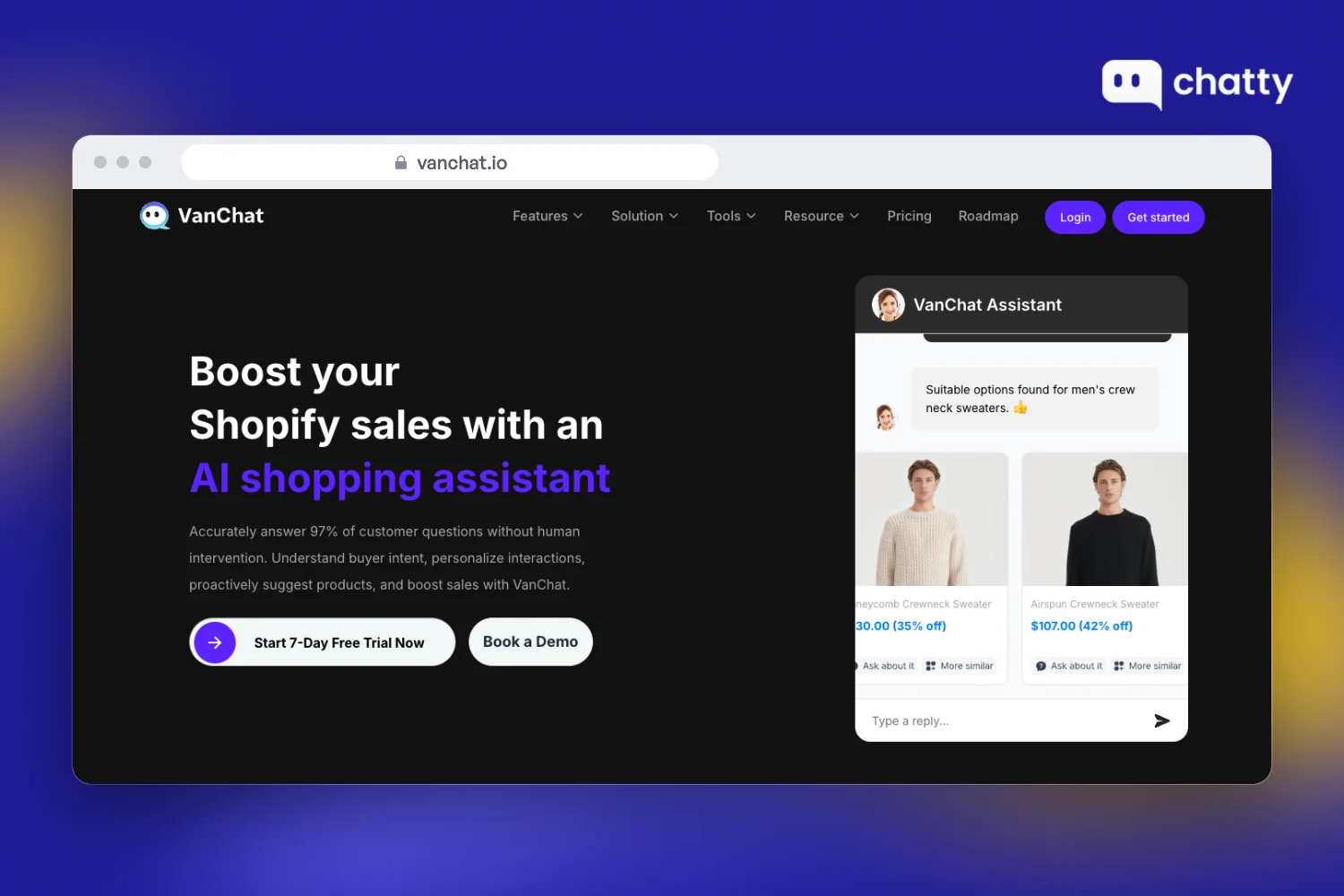
VanChat markets proactive AI selling and states unlimited products and unlimited chat replies on every paid tier, starting at the $19 entry plan. If gap 4 and gap 1 are both yours, it is the cheapest route to a fully-trained selling AI here, as long as you price the visitor tier you will actually need, which for most live stores is $49 or $99 rather than $19.
It closes nothing else:
- Starter at $19 covers 100 visitors a month, Advanced at $49 covers 1,000, Pro at $99 covers 10,000. Visitors is the one meter that moves without you doing anything, so model your peak month rather than your average.
- No overage policy appears on its App Store listing or its pricing page, so what happens past a visitor cap is unclear.
- The free plan is described as being for development stores, so check whether it will run on a live shop before you plan around it.
- WhatsApp appears in its "works with" list but there is no inbound inbox. It's a storefront widget.
It rates 4.9 stars across 92 reviews, a small base, and runs on Shopify only.
MooseDesk alternatives where WhatsApp arrives in the inbox
Re:amaze and Tidio treat WhatsApp the way MooseDesk treats Messenger, as a channel that lands in the workspace rather than a link that leaves it. Both carry a condition worth knowing first:
Re:amaze
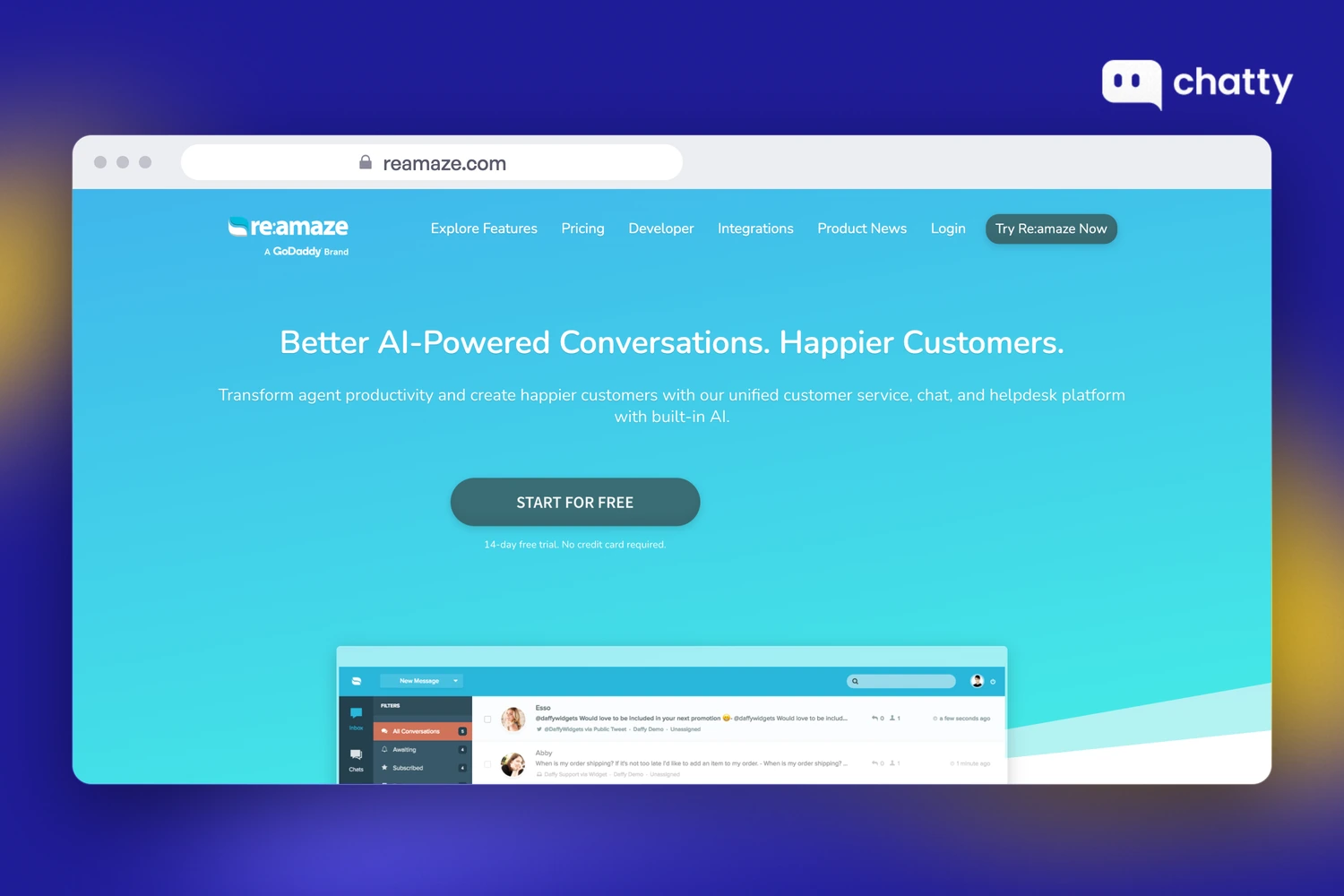
Re:amaze has run since 2014 and gives WhatsApp its own dedicated channel in the shared inbox, alongside email, SMS, social and live chat. Agents reply from Re:amaze without opening WhatsApp at all.
The conditions:
- WhatsApp runs through Twilio on the backend, which means you need a Twilio account and a number from them before any of it works. That's a second vendor and a second bill.
- The AI allowance is metered per user, per month, and it's small. Basic at $29 per user includes 5 AI Agent resolutions per user a month, Pro at $49 includes 10, Plus at $69 includes 20. A three-person team on Pro gets 30 AI resolutions a month for $147. If unlimited AI replies is why you are looking, look elsewhere.
- A separate Starter plan at $59 covers 500 responded conversations, with extras at $15 per 100 according to its Shopify listing. It drops the per-user AI meter, which is the part that makes the plans above expensive for a team.
It rates 4.5 across 142 reviews and runs a 14-day trial.
Tidio
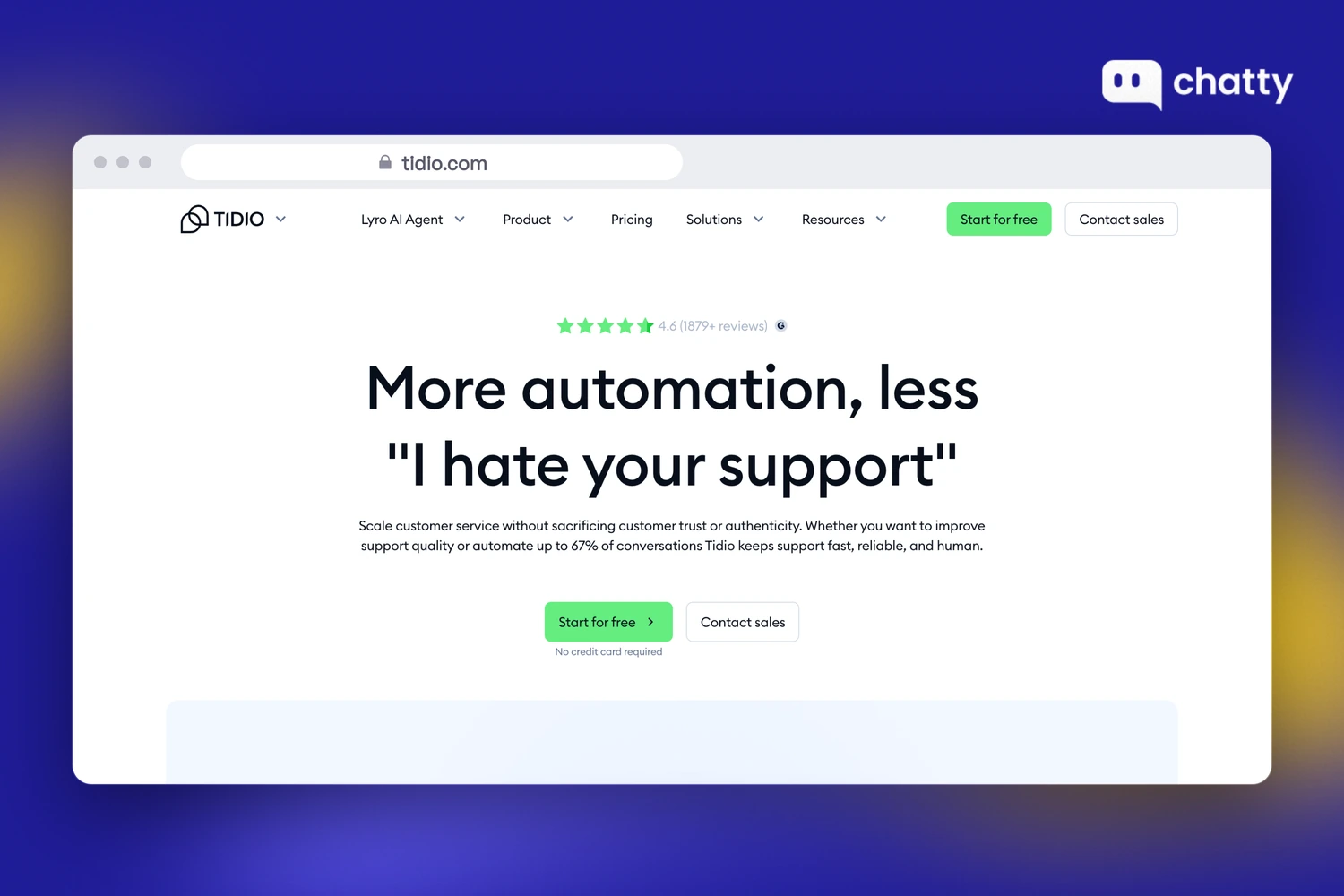
Tidio puts WhatsApp, Messenger, Instagram, email and live chat in one shared inbox, and the WhatsApp integration is free on every plan, including the free one. That is the most generous WhatsApp position in this comparison.
Two conditions:
- You can reply on WhatsApp but you cannot start a conversation there. Tidio's own documentation states it is not possible to initiate WhatsApp conversations from its end. Group messages, statuses, reactions and calls are not supported either. So if WhatsApp is where your carts are abandoned, Tidio can answer those shoppers but cannot go and get them.
- Pricing splits into three separately priced products: Customer Service at $29 for 100 conversations, Flows at $29 for 2,000 visitors, and Lyro AI Chatbot at $39 for 50 Lyro conversations. Buying the AI plus the human inbox means two subscriptions, so comparing Tidio's "$29" against MooseDesk's "$19" compares part of a stack against a whole one.
Tidio's docs state that Lyro reads individual Shopify product pages through Shopify's API rather than scraping them, and no product cap is published, so catalog size is not the constraint here. It rates 4.8 across 1,247 reviews and supports far more platforms than anything else here, including WooCommerce, Wix and BigCommerce.
These two are not the only tools that close this gap, they are the two that do little else. Willdesk and Gorgias take WhatsApp into the inbox as part of a helpdesk, Chatty does it as part of a sales agent, and eDesk documents it more thoroughly than anyone here. Each gets its own section below.
MooseDesk alternatives that give you a helpdesk under $49
Willdesk and Gorgias both hand you a working ticket queue for less than MooseDesk charges to unlock one, and both bring WhatsApp into the inbox while they're at it. Check what volume each sub-$49 price actually buys, because that is where the two separate.
Willdesk
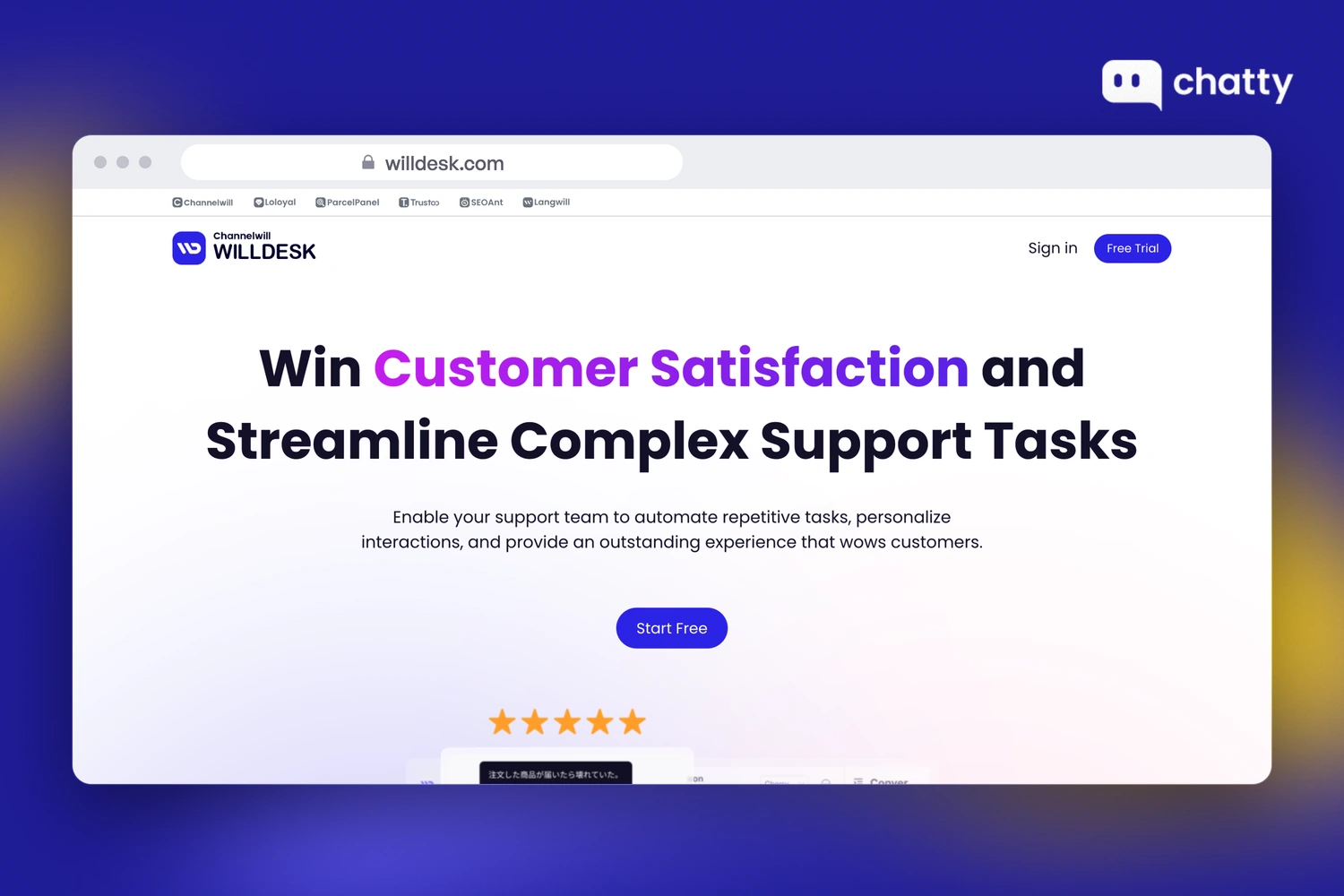
Willdesk, built by Channelwill and live since February 2021, closes four of the five gaps, a coverage matched only by Chatty, and does it at the lowest entry price here.
- Email, live chat, Instagram, Messenger and WhatsApp all land in one inbox. Gap 2 closed properly, through the WhatsApp Business API rather than a button. WhatsApp is metered separately though, at roughly $0.20 a conversation on top of your plan.
- Ticketing starts at $16.90 a month, against MooseDesk's $49. Gap 3 closed.
- Its Smart Workflow Builder covers auto cart recovery and product recommendations, and its AI agent handles order tracking, returns, cancellations and address updates. Gap 1 closed, and note that last part, because taking action on an order is something MooseDesk's AI does not do at all.
- The free plan trains the AI on 1,000 products, ten times MooseDesk's free tier, with unlimited agents. Gap 4 closed.
What it does not close is gap 5. Willdesk's own site publishes no case studies at all, and its case-study heading sits over an empty section. The one named result on its parent's site credits "CWILL AI Chat" instead of Willdesk by name. Attribution that loose is not something you can check.
The real catch is the usage ladder. The free plan caps at 20 conversations, which most stores will hit within days. Basic at $16.90 covers 100 conversations and Pro at $89.90 covers 1,000, with overage at $20 per 100 AI conversations plus $12 per 100 regular conversations on Basic.
Read Willdesk's catalog ceiling carefully, because it's the sharpest thing in the plan. Its help centre states that a plan of 1,000 conversations or fewer enables up to 1,000 products in the AI knowledge base, and only above that does the product count follow the conversation limit. So Basic at $16.90 trains on the same 1,000 products the free plan does, and that ceiling lives in a help article rather than on the pricing page.
It rates 4.8 stars across 355 reviews.
Gorgias
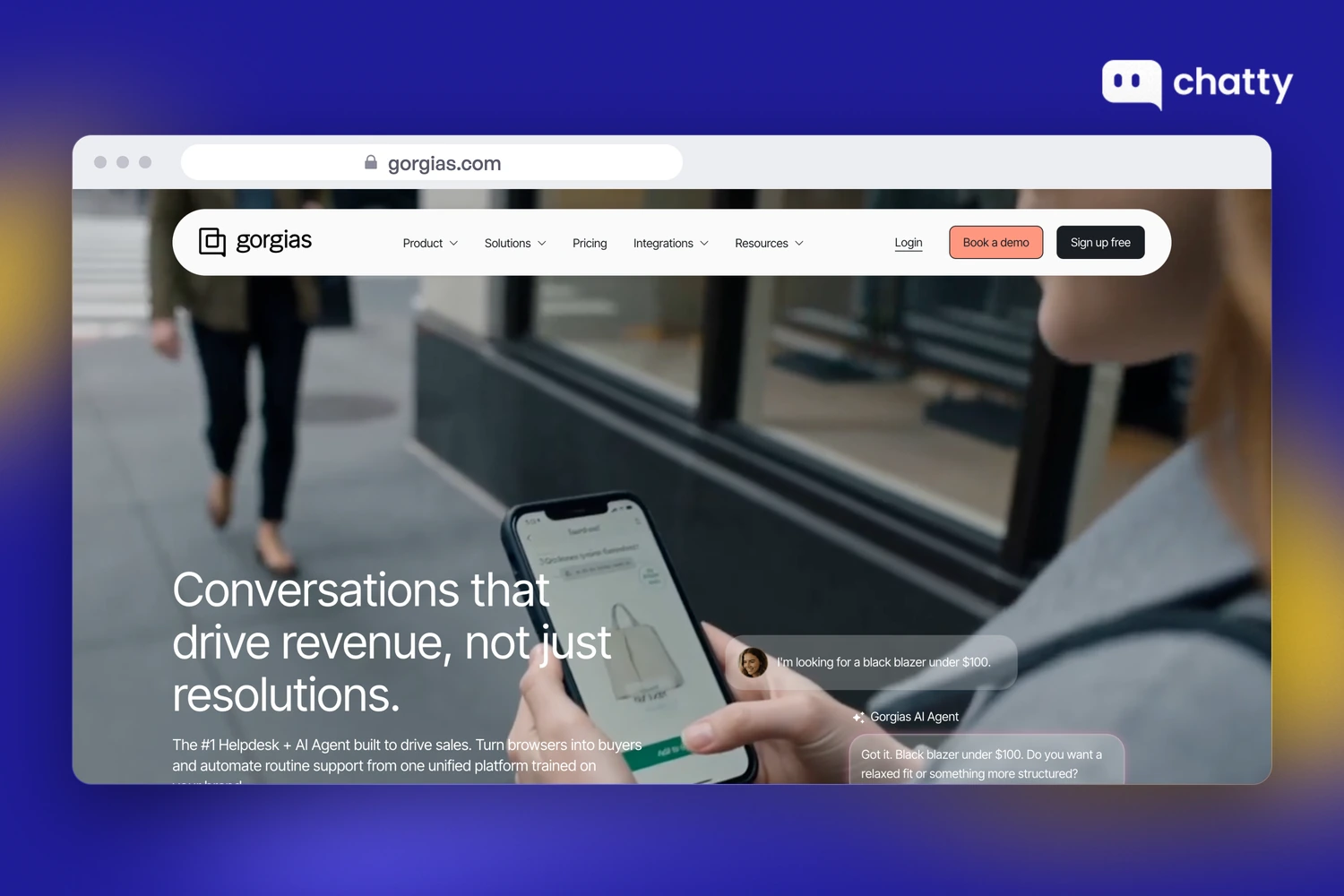
Gorgias is the established ticket-based helpdesk for Shopify, live since 2017, and it starts at $10 for 50 tickets a month with 3 agents, the cheapest entry into real ticketing here.
- WhatsApp is an official integration. Messages become tickets in the unified inbox, and Gorgias matches the phone number against the Shopify profile automatically. Gap 2 closed thoroughly.
- Read the $10 against its ticket count, not against MooseDesk's $49. Starter covers 50 tickets, then Basic is $60 for 300, Pro $360 for 2,000 and Advanced $900 for 5,000. MooseDesk's $49 Growth covers 300, so at the volume MooseDesk prices for, Gorgias costs $60. Below roughly 50 tickets a month it is far and away the cheapest queue here; above that it stops being the cheap option at all.
- Overage bites hardest on the cheapest plan. $0.40 a ticket on Starter, then $36 to $40 per additional 100 higher up. Running 300 tickets on the $10 plan costs $110, not $10.
- Seats are capped, not unlimited. Starter includes 3 agents. Gorgias's own phrasing, "never priced per agent", is accurate and is not the same thing as unlimited.
- No product cap is published, so your catalog size is irrelevant to the bill. Useful for a 20,000-SKU store.
- On selling it's partial. Gorgias markets on revenue and ships Chat Campaigns and a Shopping Assistant. The AI Agent is on every plan but billed at $1.50 per AI conversation, on top of the ticket fee, so a fully AI-resolved ticket can incur two charges.
Price it from the App Store listing rather than gorgias.com, which now headlines the AI-bundled ladder at $90, $550 and $1,430 instead. Same product, two very different sticker prices.
It rates 4.2 stars across 617 reviews, the lowest in this guide, with billing transparency the recurring theme in critical reviews. Worth reading our deeper look at where it fits before committing.
MooseDesk alternatives priced by catalog size
Chizy closes the catalog gap and nothing else, and it gives unlimited AI chats on paid tiers. SmartBot is filed here because roundups keep recommending it for the catalog problem, but it does not price that way: every tier caps AI chats as well as products. Both handle WhatsApp exactly the way MooseDesk does, as a handover route out and not a channel in. Chizy is the pick here if the 100-product ceiling is your whole problem:
Chizy
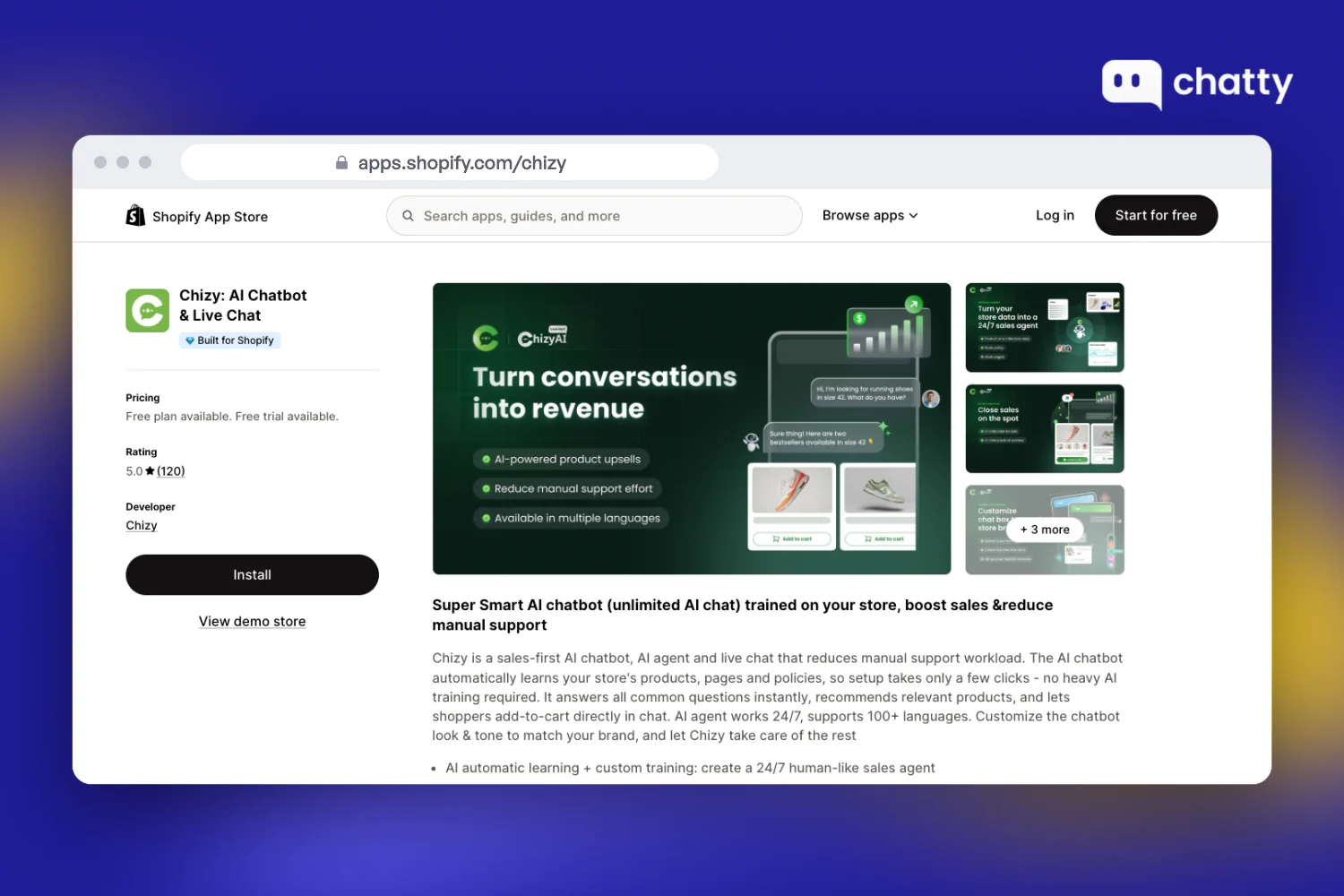
Chizy launched in September 2025 and offers the most catalog per dollar of any tool here that publishes a product ladder.
- Free covers 200 products, double MooseDesk's free tier.
- Starter at $19 covers 1,000 products, double MooseDesk's Starter at exactly the same price.
- Growth at $69 covers 5,000 and Scale at $199 covers 25,000, with an Enterprise tier above it that publishes no price.
- Paid tiers carry a 14-day trial, twice MooseDesk's seven days.
Its own listing describes WhatsApp as a handover destination, "seamless transition from AI to human via our live chat or WhatsApp, phone, email," which is the same shape as MooseDesk's button. It rates 5.0 across 120 reviews, strong but built on a young base. It's been live under a year and hasn't been independently reviewed at scale, so treat it as promising rather than proven.
SmartBot
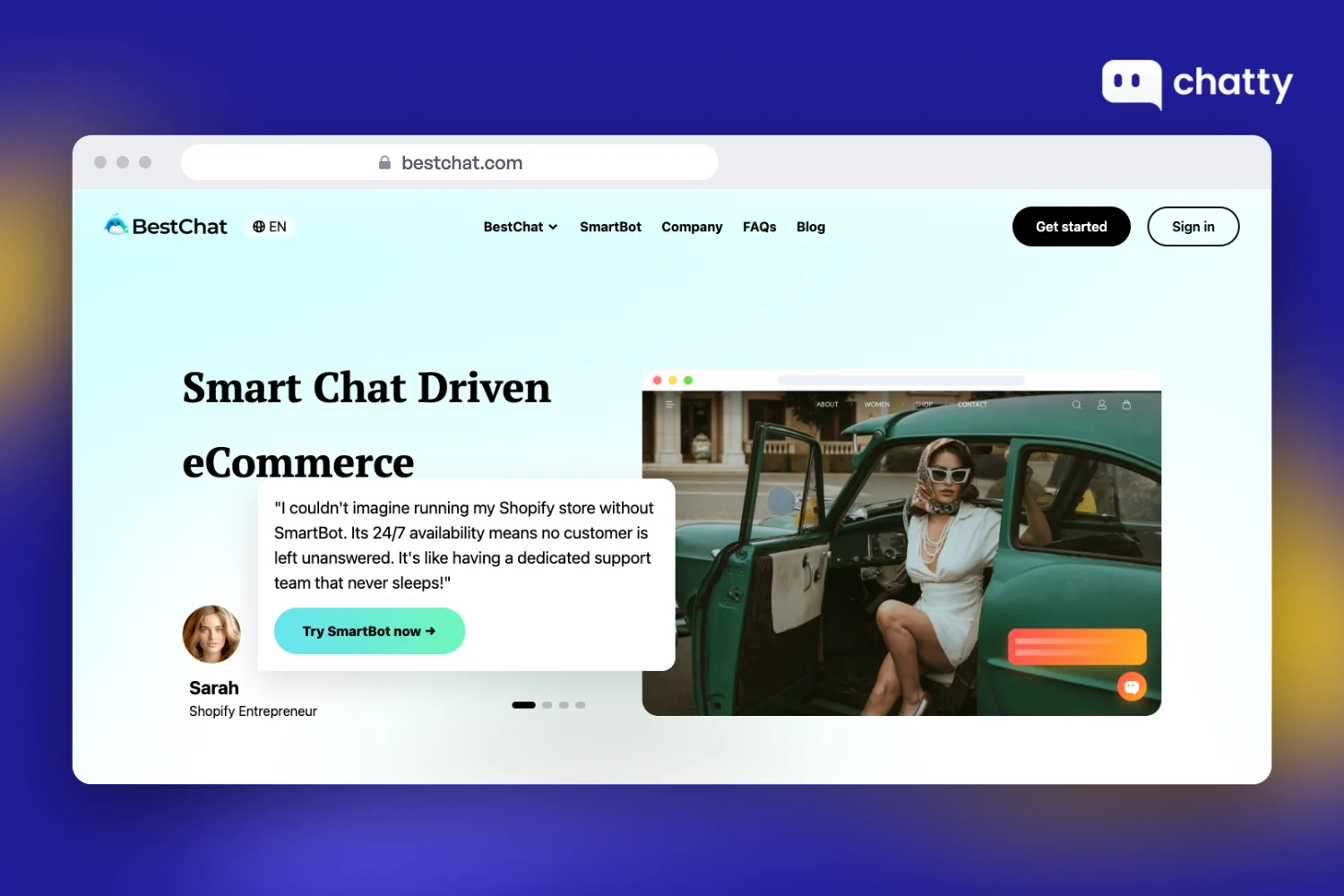
SmartBot, built by BestChat and launched in August 2023, meters AI chats a month with a matching cap on the products the AI may learn, so it only behaves like catalog pricing while chat volume stays inside the tier (bestchat.com/pricing.html, read 24 August 2026).
- Free covers 80 AI chats and 80 products a month, and it renews.
- Starter at $10 covers 300 AI chats and 300 products, and Basic at $30 covers 1,000 of each.
- Growth at $60 covers 3,000 of each, and Enterprise at $450 is the only tier with unlimited AI chats.
- Above 3,000 products there is no published tier but that $450 one, and it states no product count at all, against MooseDesk at $249 and Chatty at $199 for 20,000. Cheap at the small end, unpriced at the large one.
Its listing describes "omnichannel messaging" as the AI handing off to live agents via WhatsApp and email, which again sends the shopper out of the app instead of bringing the message in. It rates 4.7 stars across 428 reviews.
Shopify Inbox: the free MooseDesk alternative to beat
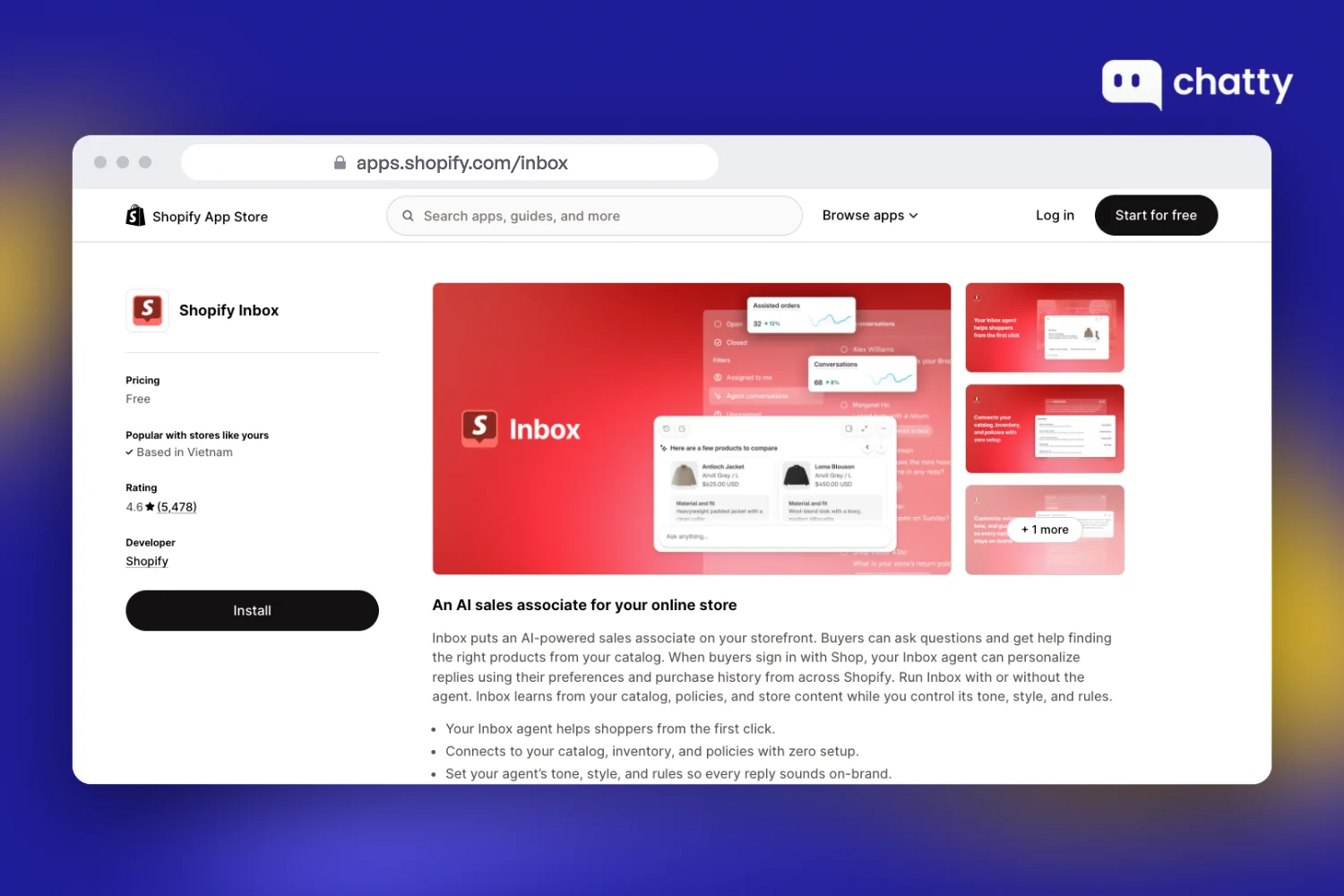
Shopify Inbox rates 4.6 stars across 5,478 reviews, by far the largest review base in this comparison, and costs nothing on any Shopify plan. Its listing describes an AI sales associate that learns from your catalog, policies and store content, with no product number attached to any of it.
On the five gaps it closes exactly one, the catalog ceiling, and only because it publishes no product cap at all. No WhatsApp, no ticket queue, no email channel, no proactive campaigns, no help center, no published per-store results. Storefront chat is the whole scope.
It's still the right answer for a large share of merchants reading this, though not for the reason its one closed gap suggests. Under 200 SKUs the catalog ceiling is inert anyway, and Chatty and Chizy both train on 200 products for free too. What Shopify Inbox has that they do not is that it is already sitting in your admin, first-party, with no extra app to install and no second vendor to manage. Plenty of comparison articles skip it because it generates no affiliate revenue.
Start there and let it prove which of the five gaps you actually have. When you find one, that's the moment to pay for something more.
Two more MooseDesk alternatives worth knowing about
Both of these come up in MooseDesk comparisons and neither is aimed at the same buyer. Each earns its place for one specific reason.
eDesk
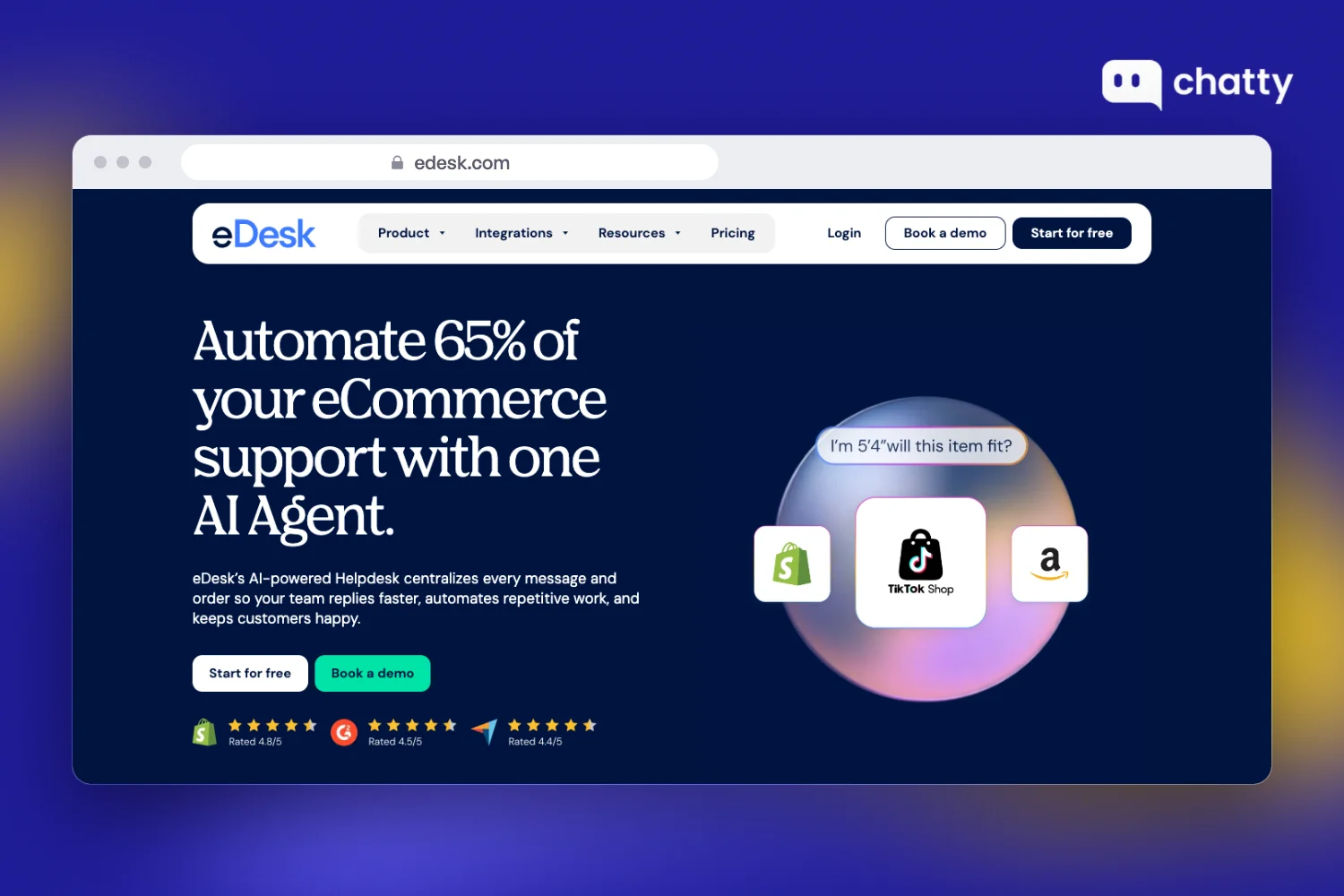
eDesk, listed as eDesk ‑ AI, Helpdesk & Chat by xSellco Ltd, has the most thoroughly documented WhatsApp on this list. Its channel guide states plainly that the customer contacts you via WhatsApp and a new ticket is created in eDesk, with every subsequent message landing in that same ticket. It also ships a separate click-out button, and the distinction between the two is documented rather than blurred, which is the exact clarity gap 2 is about.
The condition is who it's built for. It rates 4.8 across 27 Shopify reviews, which is 27 reviews accumulated since a July 2016 launch. eDesk's centre of gravity is Amazon, eBay and Walmart, not Shopify, and twenty-seven reviews in ten years reflects that.
Price it carefully before shortlisting:
- Essential is $39 per agent a month on annual billing, $49 monthly, and locks you to one store. Growth runs $89 or $115, Professional $119 or $149.
- The AI bills separately at $0.99 per outcome, with a default cap of 500 resolutions a month.
- There is no free plan, only a 14-day trial.
- WhatsApp needs a valid payment method on file before any message will send, because Meta's per-conversation charges are yours on top of the subscription.
A three-agent store running AI is comfortably past $200 a month. Shortlist eDesk if you also sell on marketplaces. If you sell on Shopify only, it's an expensive way to buy a WhatsApp channel.
Richpanel
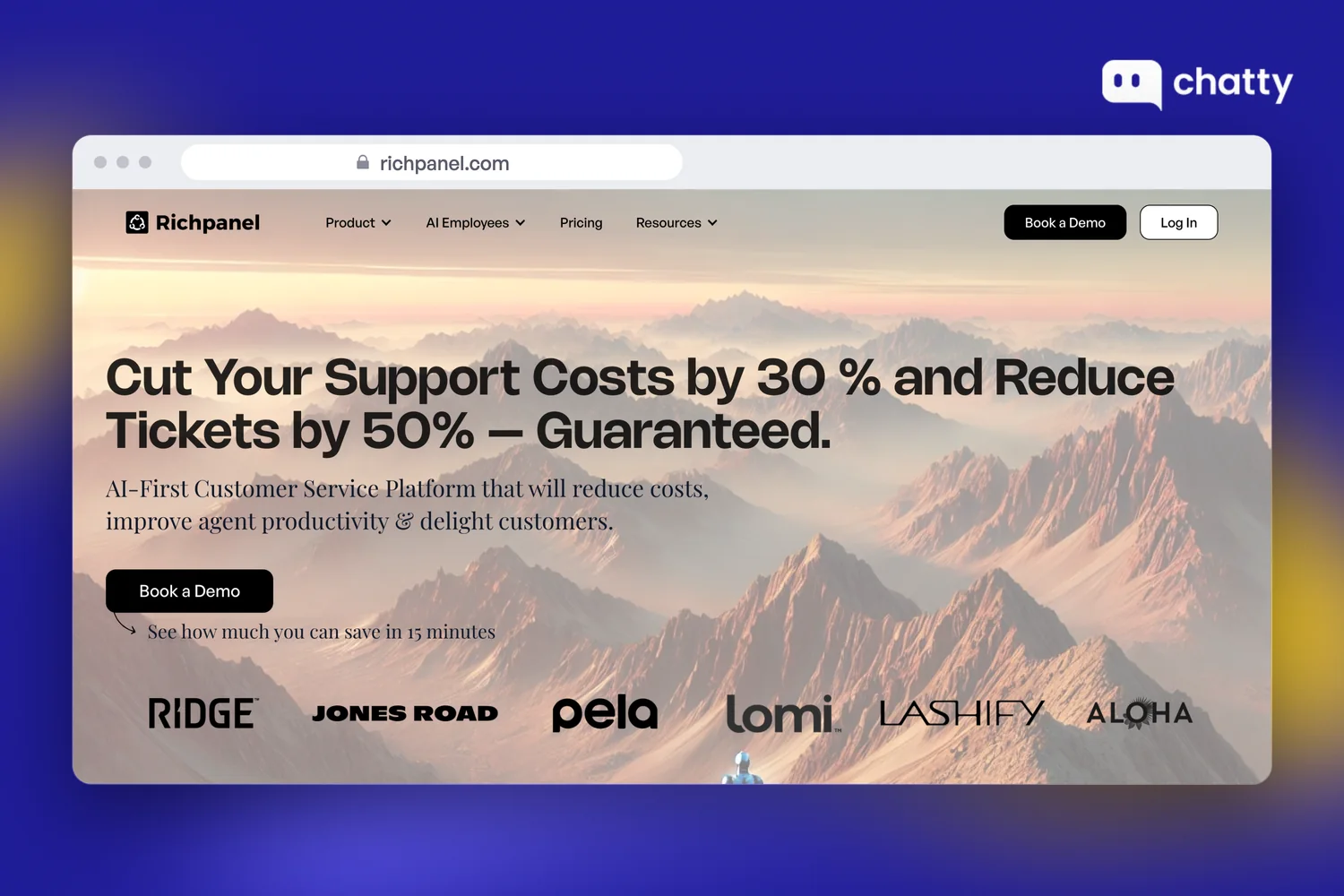
Richpanel rates 4.7 across 121 Shopify reviews and does something almost nobody in this category does: it publishes revenue attributed to support, per named store. Ridge shows $2.1M in support-driven revenue, Jones Road Beauty $1.5M+, and Bicycle Warehouse an 11% conversations-to-revenue rate. Those are self-reported rather than audited, but they are the kind of number gap 1 is about.
Two conditions, and the first is a hard stop for most readers here:
- There is a $200 a month minimum, stated on the homepage and absent from the pricing page. Against MooseDesk's $19 that's a different bracket entirely, not a swap.
- Its two live price lists disagree with each other. The Shopify listing sells PRO at $89 a month and a Self Service plan at $119. The vendor site sells seats at $99 and gives the self-service portal away free. Price it from richpanel.com, not from the App Store.
On WhatsApp, treat it as unconfirmed. Richpanel markets WhatsApp on its pricing and helpdesk pages. But WhatsApp appears in neither Shopify plan's channel list, is absent from the integrations page, and has no setup guide in the help centre, while every other channel has one.
Its own marketing describes a manual, sales-assisted approval process. Ask before you buy rather than assuming it ships.
Richpanel sits in a different bracket from everything else here. Shortlist it once support already produces enough revenue to justify $200 a month, which is a different decision from swapping out a $19 app.
Which MooseDesk alternative fits your store
Five rules cover most stores:
- Chat answers but never sells? Chatty or VanChat, and Willdesk if you want it bundled with a helpdesk.
- WhatsApp is your main channel? Willdesk, Gorgias, eDesk, Re:amaze, Tidio or Chatty all take it into the inbox. Chizy, SmartBot and MooseDesk hand off to WhatsApp and leave the conversation there. VanChat only badges it, Shopify Inbox has none at all, and Richpanel's is unconfirmed.
- You need a ticket queue and $49 is too much? Under 50 tickets a month, Gorgias at $10. Above that, Willdesk at $16.90 for 100 conversations, because Gorgias’s next tier is $60 and overtakes the $49 you left. Tidio and Re:amaze at $29 and eDesk at $39 per agent are the other sub-$49 routes.
- The 100-product ceiling is your whole problem? Chizy at $19 for 1,000 products, or VanChat at the same $19 for unlimited products if you can live with its 100-visitor cap. Tidio and Shopify Inbox publish no cap at all, and Shopify Inbox is free.
- Two or more of the above? Willdesk and Chatty both close four of the five. Take Willdesk if a ticket queue is one of your two, because Chatty has none.
Then run three checks before you commit:
- Ask whether WhatsApp lands in the inbox or opens a new window. Vendors describe both the same way in marketing. The docs separate them: look for a channel setup guide, not a button setup guide.
- Ask what happens to products above the cap. None of the pricing pages checked for this article states it. Whether they are excluded, sampled or answered from page text changes what your shoppers hear.
- Check the trial against your setup time. Seven days on MooseDesk and on Chatty’s paid plans, 14 on Chizy, Re:amaze and eDesk, which is the one tool here with no free tier to fall back on. Training an AI on a real catalog and judging its answers takes most stores longer than a week.
Most of these install in minutes with no long commitment beyond monthly billing, so testing two properly beats reading another ten comparison tables.
If your store runs on Shopify, Chatty's free tier is a low-friction way to see whether an AI trained on your own product records holds up on your catalog. You get 50 AI conversations a month that renew and a 200-product training cap, without a trial clock or a card requirement. Proactive selling is the one thing you can't test there, since it starts on Pro at $68.99.
FAQ
No. It rates 5.0 across 452 Shopify reviews and its installs grew 355% year on year. Merchants look for alternatives because of what it does not do. Every gap in this article comes from MooseDesk's own pages, not from complaints.
Not inside the helpdesk. MooseDesk's documentation files WhatsApp under redirect buttons. Publisher Vegahub does ship a real WhatsApp product, but as a separate free app, Moose WhatsApp Chat Button, with its own inbox. So WhatsApp works, it just doesn't run through the MooseDesk AI, ticket history or reporting. Messenger and Instagram do.
Not in the MooseDesk helpdesk app. No proactive messaging or cart recovery appears on its listing, homepage or pricing page as of August 2026. Publisher Vegahub does offer it, in the separate Moose WhatsApp Chat Button app. So it exists in the family, just not in the product you install as your helpdesk.
The AI replies are genuinely unlimited on every tier including free, and that claim holds up. What the free plan also does is limit the AI to 100 products, 1 team member, 0 email channels and no ticket management. Those limits appear on moosedesk.com/pricing and not on the Shopify App Store listing.
Gorgias at $10 a month, but only for 50 tickets; its next tier is $60, which is more than the $49 you were trying to beat. Willdesk at $16.90 covers 100 conversations and holds up better as volume grows. Tidio and Re:amaze at $29 and eDesk at $39 per agent are the other routes under $49. All of them bring WhatsApp into the inbox, which MooseDesk does not.
Yes, with one thing to check. Chatty's 50 AI conversations and SmartBot's 80 both renew every month, and Chizy's 200-product cap is a standing ceiling rather than a budget you spend down, so those free plans keep working. Willdesk's free plan caps at 20 conversations. Confirm whether your allowance renews or runs down once, because that decides whether a free plan can carry a real support process or only a trial.