











Customer expectations continue to rise in 2026, and excellent service is no longer optional. Businesses must equip their teams with the right skills to handle complex conversations, multiple channels, and higher performance standards. Different types of customer service training address different skill gaps, from communication and empathy to technical efficiency. This guide breaks down the most effective training methods, explains when to use each one, and shows how to build a stronger, more consistent support team.
- 88% of customers say experience is as important as products or services Salesforce research confirms that service quality directly influences revenue, retention, and brand reputation. Well-trained teams deliver measurable business impact through higher CSAT scores, stronger first contact resolution, and consistent service across all channels.
- Customer service training falls into three main categories: in-person, online, and hybrid In-person training works best for role-playing and live simulations. Online training offers flexibility and scalability for distributed teams. Hybrid models combine both approaches to balance structured learning with hands-on practice and engagement.
- 10 training methods each target different skill gaps and team structures Instructor-led training, role-playing, peer mentorship, workshops, microlearning, eLearning, webinars, virtual instructor-led training (VILT), on-the-job coaching, and performance support tools (EPSS) each serve specific purposes. The most effective programs blend multiple methods together.
- Blended training approaches produce the strongest results across all team types Onboarding blends combine shadowing, microlearning, and role-play for faster ramp-up. Soft skills blends use workshops, role-play, and coaching for empathy development. Technical blends pair eLearning with performance support tools and case-based coaching for accuracy.
- Choosing the right training depends on team size, service channel, and skill priorities Small teams benefit from flexible workshops and short courses. Large teams need scalable eLearning with progress tracking. Phone teams need tone control practice, while chat teams need concise writing drills. Analyze performance data first to determine whether soft skills or technical skills need priority.
Why customer service training matters more than ever
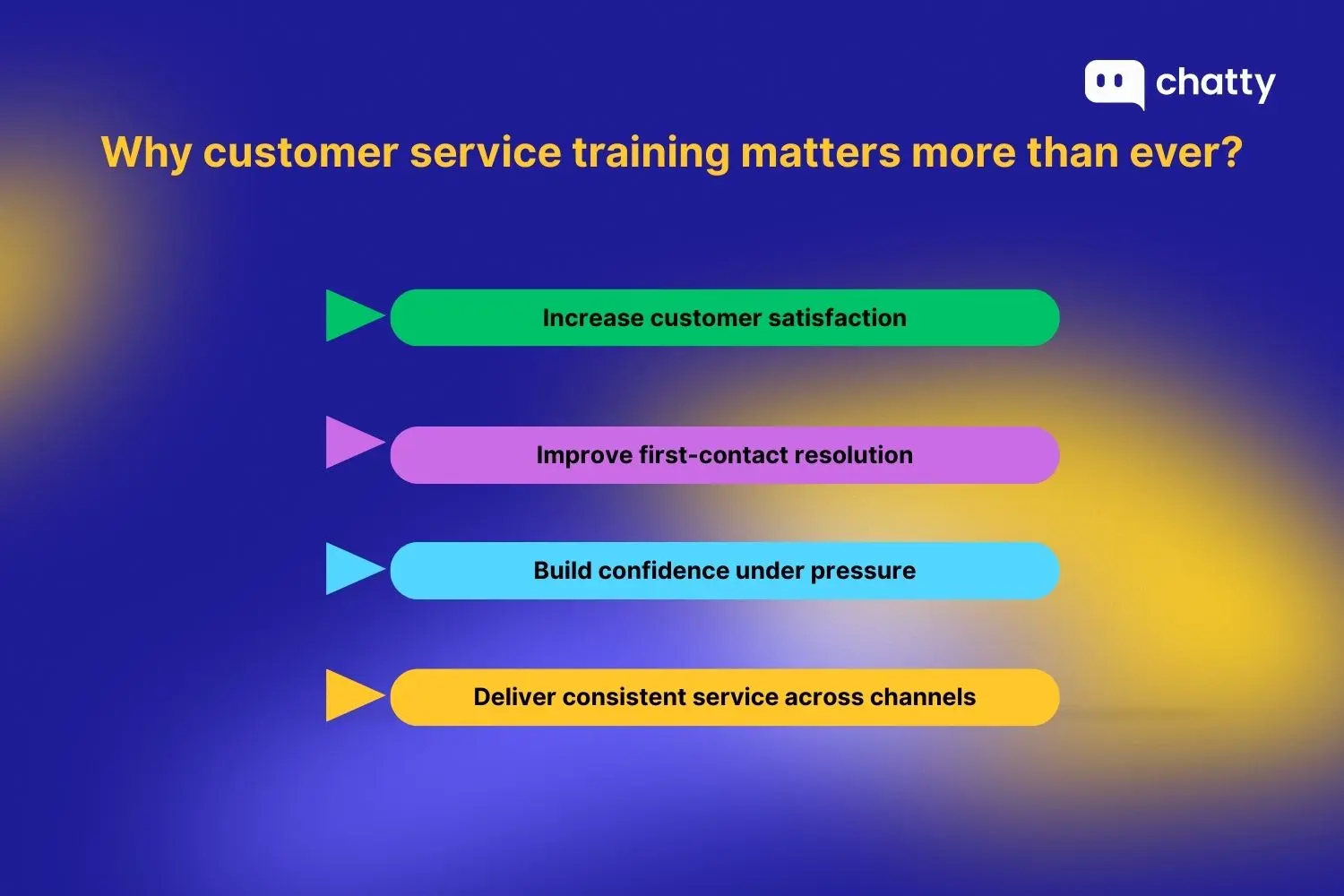
Today's customers expect fast, personalized, and smooth support across every channel. According to Salesforce, 88% of customers say the experience a company provides is as important as its products or services. That means service quality is no longer a support function. It directly influences revenue, retention, and brand reputation.
Well-trained teams deliver measurable business impact. Research from HubSpot shows that 93% of customers are more likely to make repeat purchases with companies that offer excellent customer service. Meanwhile, a PwC study found that 32% of customers will stop doing business with a brand they love after just one bad experience.
Effective training improves key performance metrics, including:
- Higher customer satisfaction scores through better communication and empathy
- Stronger first contact resolution by equipping staff with problem-solving frameworks
- Greater employee confidence when handling complex or high-pressure situations
- Consistent service quality across phone, email, chat, and social channels
As expectations continue to rise, customer service training is no longer optional. It is a strategic investment that protects loyalty, strengthens reputation, and drives long-term growth.
The main categories of customer service training types
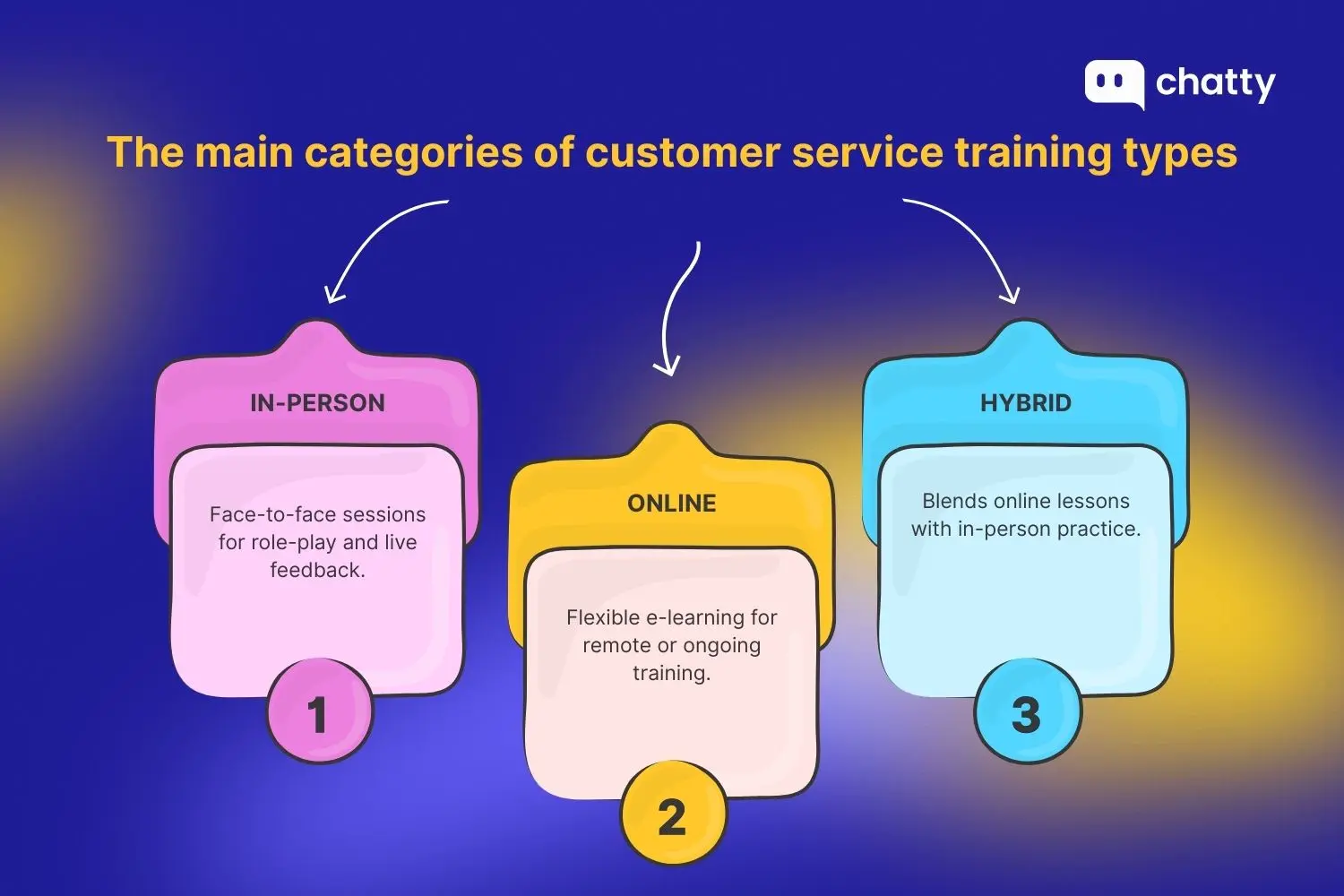
Customer service training generally falls into three main categories. Understanding this framework helps organizations choose the right format based on team size, budget, goals, and operational structure.
In-person training types
In-person training takes place in a physical setting such as workshops, seminars, or classroom sessions. This format is ideal for role-playing, live simulations, and immediate trainer feedback. Teams can practice handling objections, de-escalating conflict, and improving communication in a controlled environment.
It is especially effective for onboarding new hires or introducing major service standards because it encourages collaboration and real-time coaching. However, it may require greater scheduling coordination and incur additional travel costs.
Online training types
Online training is delivered through learning platforms, video modules, webinars, or virtual classrooms. It offers flexibility, allowing employees to learn at their own pace and revisit materials when needed. This format works well for distributed teams and ongoing skill development.
Online programs are scalable, cost-efficient, and easy to update. They are particularly useful for product knowledge, compliance training, and customer communication frameworks.
Hybrid training types
Hybrid training combines in-person and online learning. Employees may complete digital modules first, then attend live sessions to practice skills. This blended approach balances flexibility with hands-on experience.
Many organizations prefer hybrid models because they reinforce knowledge while maintaining engagement and consistency across teams.
10 types of customer service training methods (With examples)
Customer service training comes in many formats, each designed to build skills and improve real-world performance.
Instructor-led training
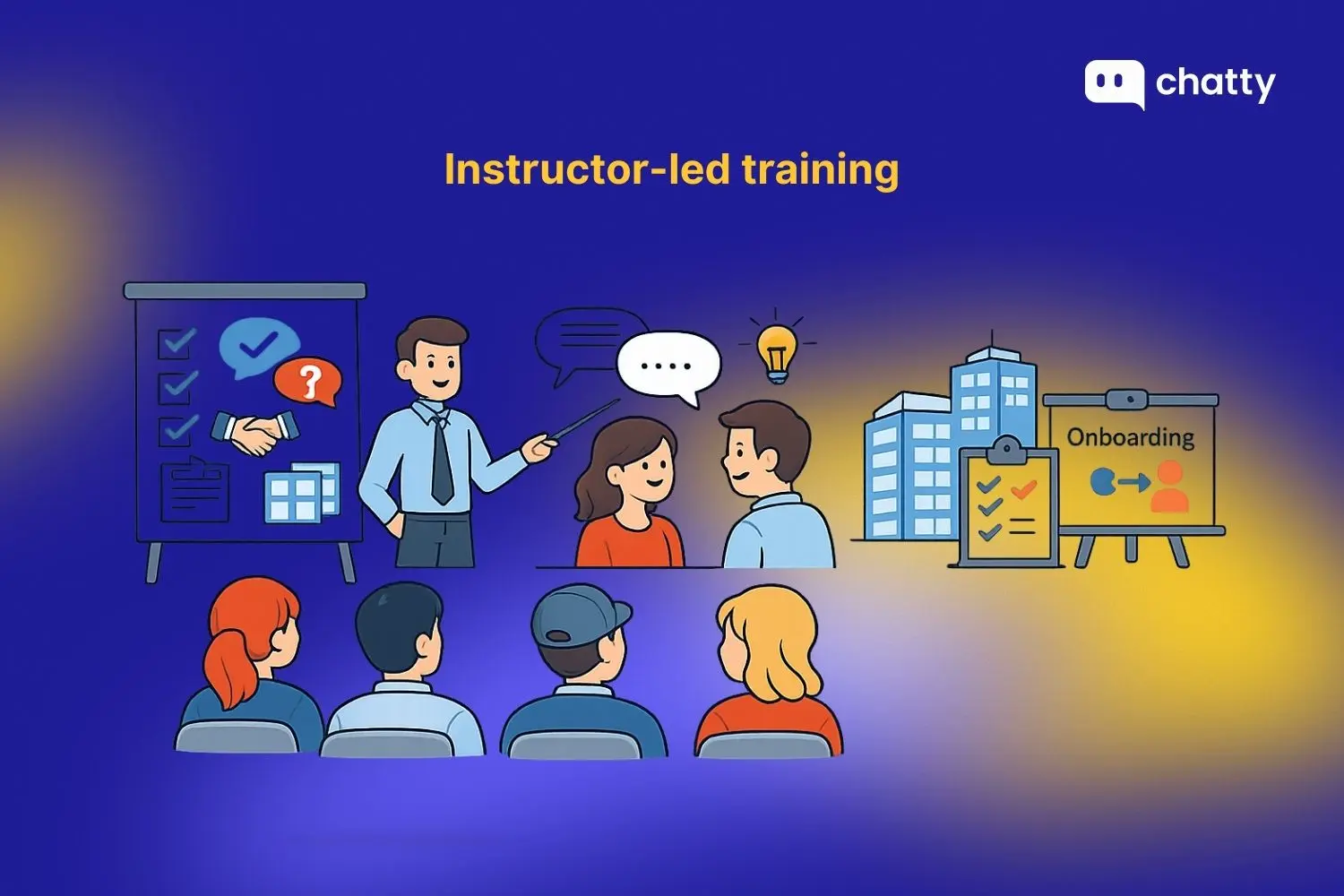
Instructor-led training is a traditional classroom-style session led by a trainer or facilitator. It can take place in person or in a structured company setting. The trainer explains service standards, communication techniques, company policies, and handling procedures, and answers questions in real time. This method works well for onboarding new employees because it provides clear guidance and consistent messaging.
For example, a retail company might run a full-day session in which the trainer walks staff through complaint-handling steps, brand voice guidelines, and live demonstrations of best practices. It encourages discussion, group interaction, and immediate clarification of misunderstandings.
Role-playing and scenario-based training
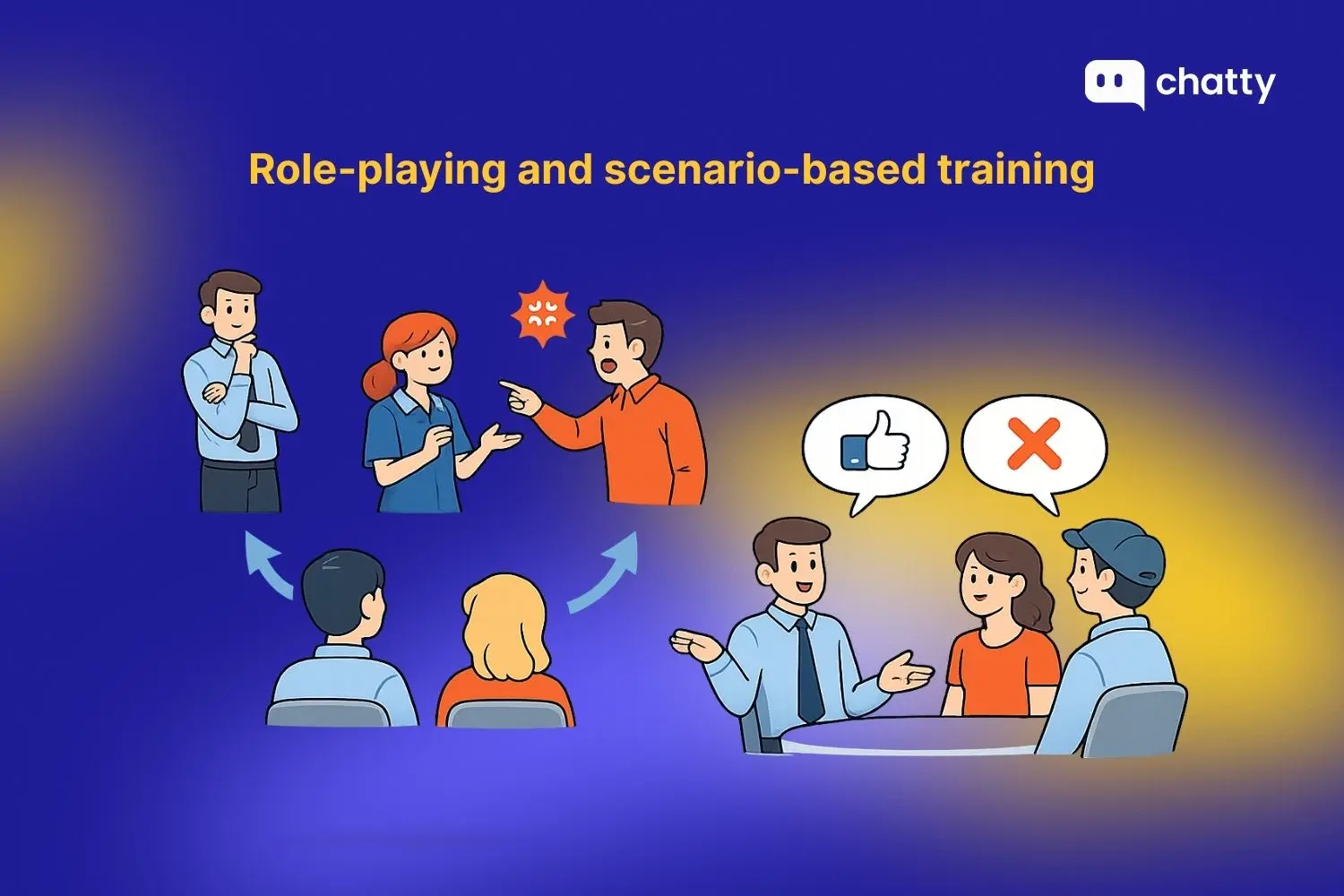
Role-playing allows employees to practice real customer situations in a safe environment. Participants act out common scenarios such as handling an angry customer, responding to a refund request, or managing a service delay.
A trainer or team member plays the customer while another plays the service representative. After the exercise, the group discusses what worked and what could be improved. This method builds confidence, emotional control, and problem-solving skills.
For example, a hotel team might simulate a double-booking issue and practice calming the guest while offering solutions. It turns theory into practical experience.
Peer mentorship and shadowing
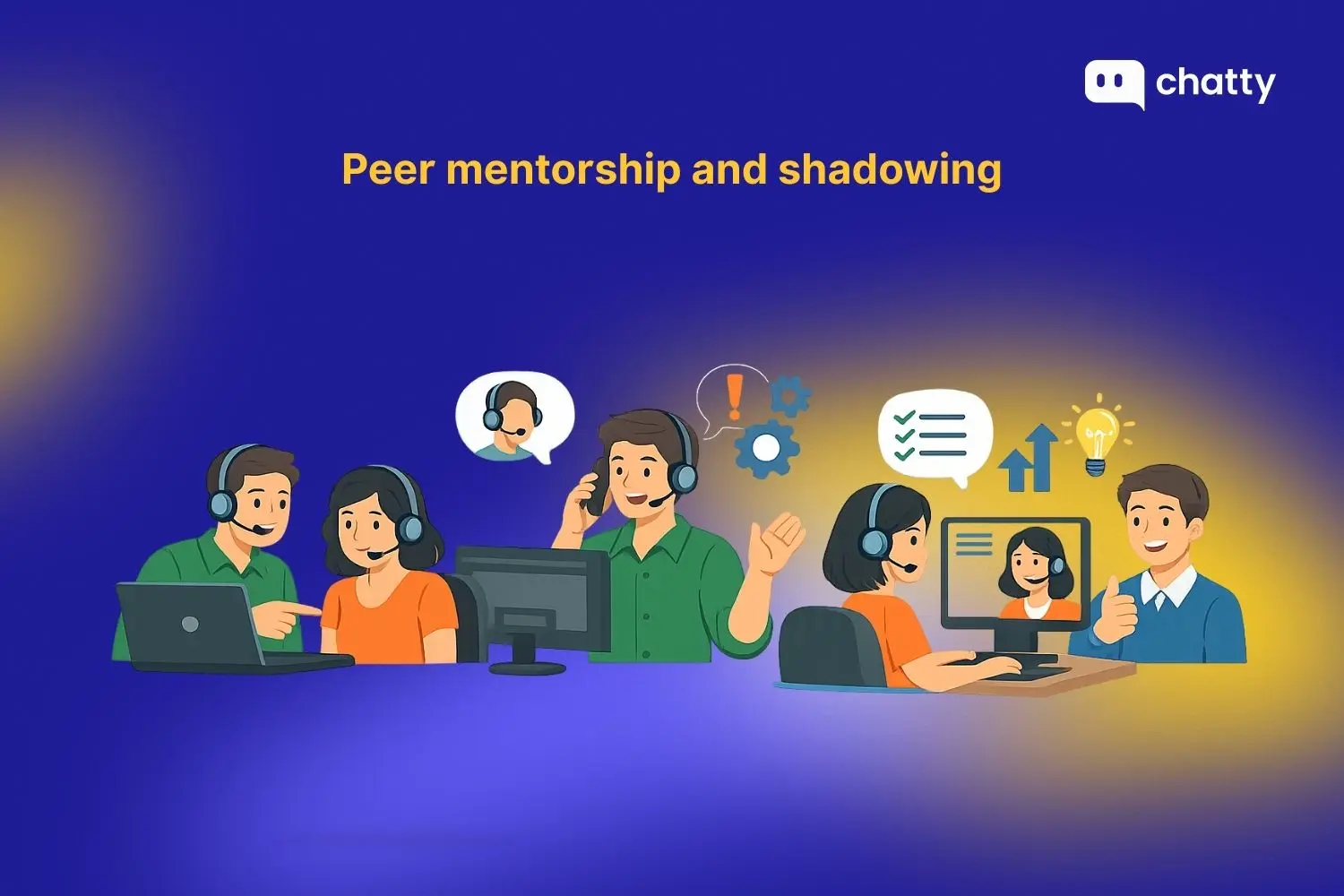
Peer mentorship pairs new or developing employees with experienced team members. Shadowing allows the learner to observe how skilled representatives handle calls, conversations, and service challenges. Over time, the mentee gradually takes on responsibilities while receiving guidance and feedback. This approach supports real-world learning and naturally builds confidence.
For example, a call center agent might listen to live support calls alongside a senior representative, then handle calls independently while the mentor monitors and provides guidance afterward. It promotes knowledge transfer, strengthens team collaboration, and reinforces company culture through shared experience.
Workshops and group training
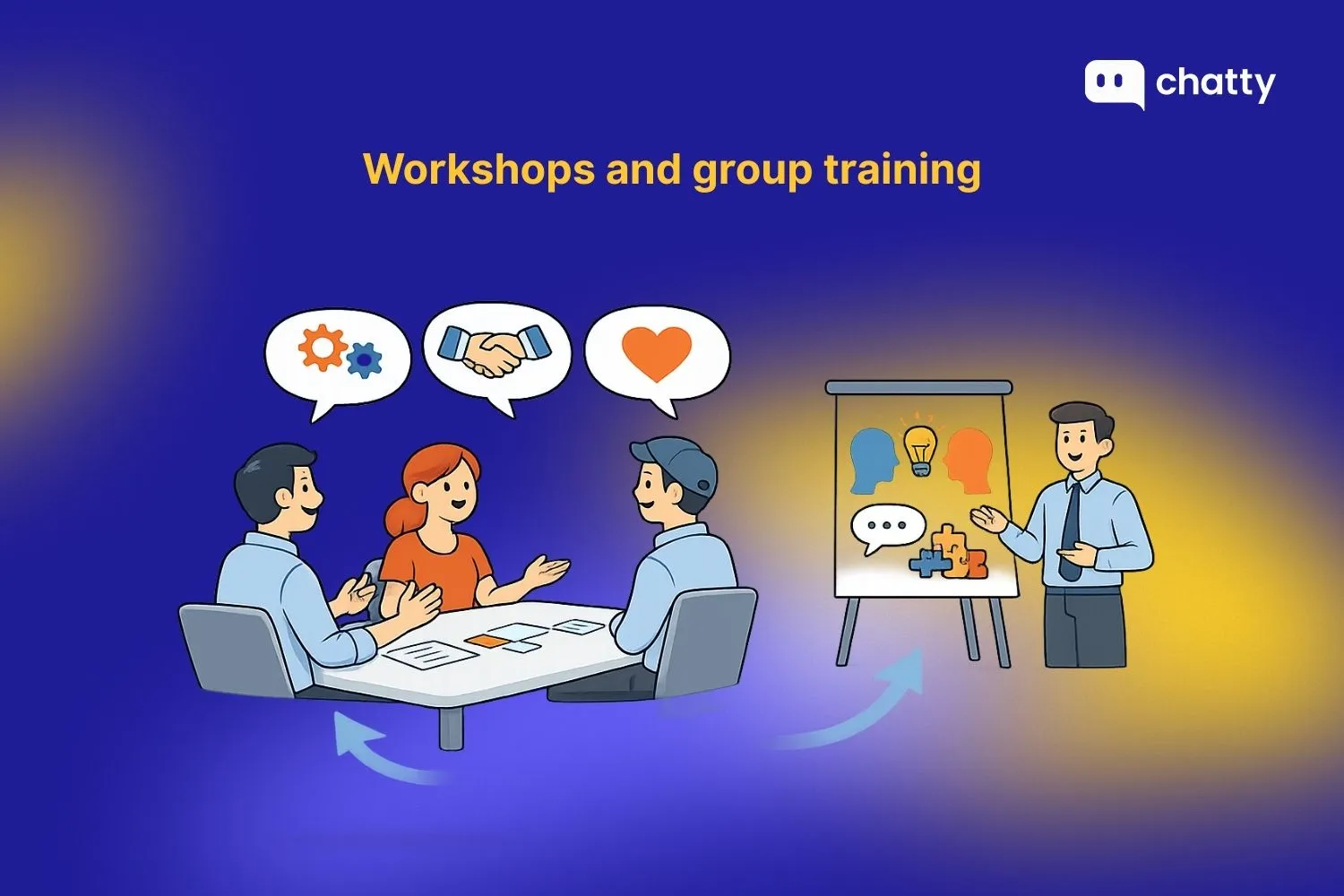
Workshops are interactive sessions focused on developing specific skills such as communication, conflict resolution, or empathy. Unlike lectures, workshops encourage active participation through group discussions, exercises, and collaborative problem-solving tasks. This format allows employees to share experiences and learn from one another.
For example, a company might organize a half-day workshop on managing difficult conversations, where teams analyze case studies and develop response strategies together. Workshops are effective for improving soft skills because they create engagement, encourage reflection, and provide practical tools employees can apply immediately in customer interactions.
Microlearning modules
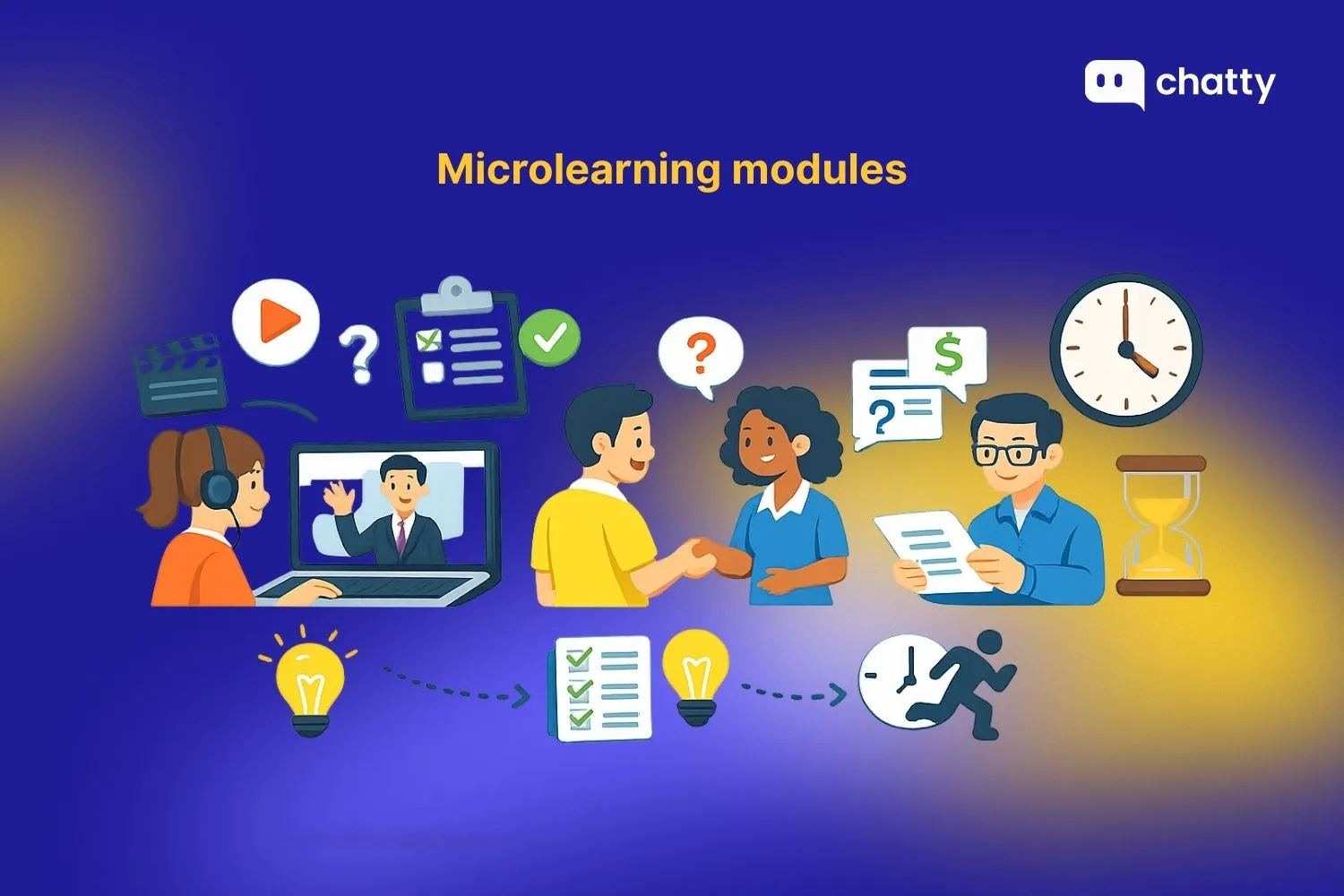
Microlearning delivers short, focused lessons that employees can complete in a few minutes. Each module targets a specific skill or topic, such as greeting customers professionally or handling billing questions. These lessons often include short videos, quizzes, or quick tips. Because the content is brief, employees can fit learning into busy schedules without feeling overwhelmed.
For example, a company may send a five-minute weekly lesson on improving tone of voice during calls. Microlearning works well for reinforcement and continuous improvement, helping teams retain information and apply small improvements consistently over time.
eLearning and self-paced courses
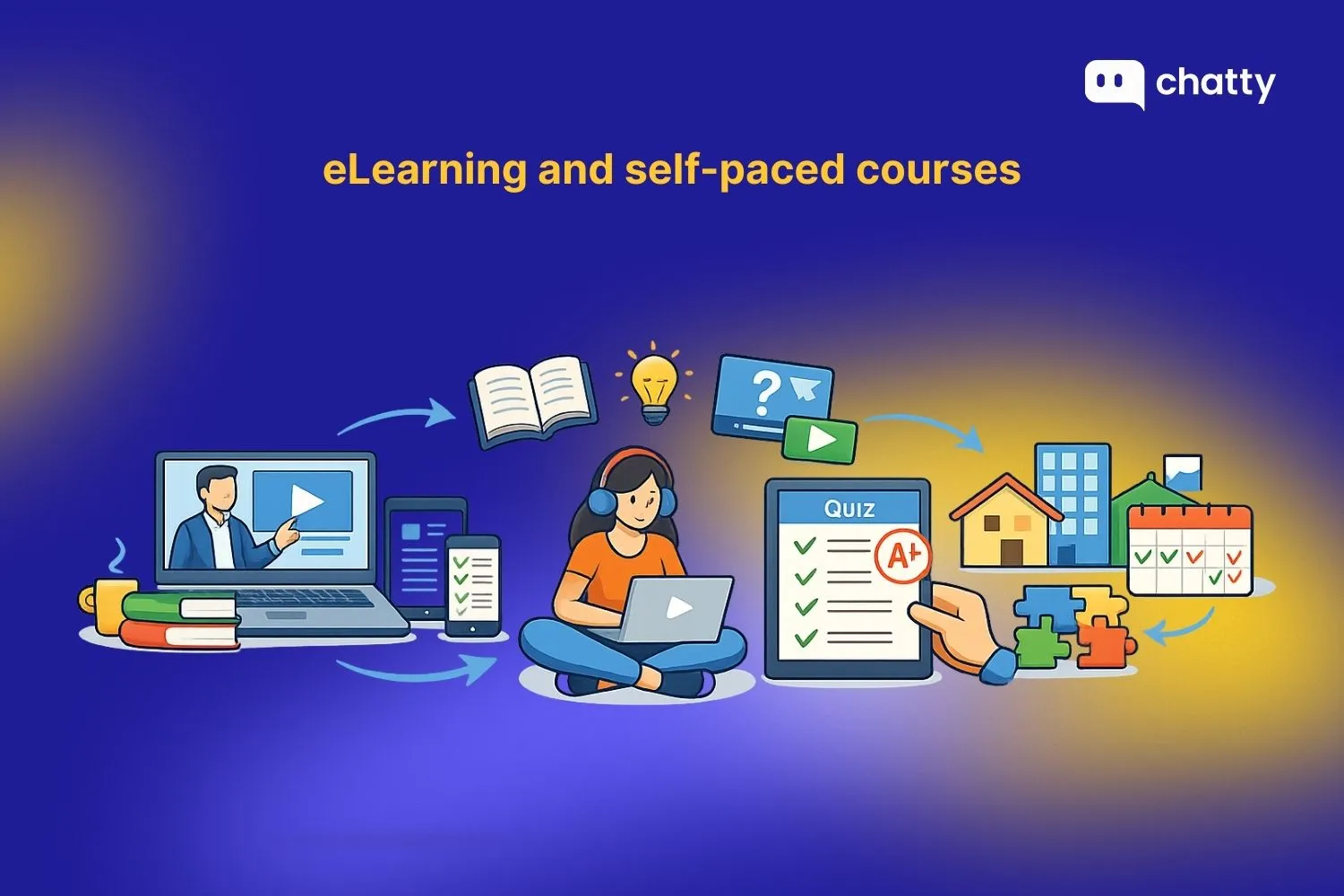
eLearning programs allow employees to complete structured training online at their own pace. These courses often include videos, reading materials, quizzes, and interactive exercises. Learners can review complex topics as needed, making it ideal for remote teams or organizations with flexible schedules.
For example, a global company may provide an online customer experience certification course that employees complete within 30 days. This method ensures consistent training across locations while allowing individuals to control their progress. It also makes it easier for managers to track completion and performance through digital learning platforms.
Webinar-based training
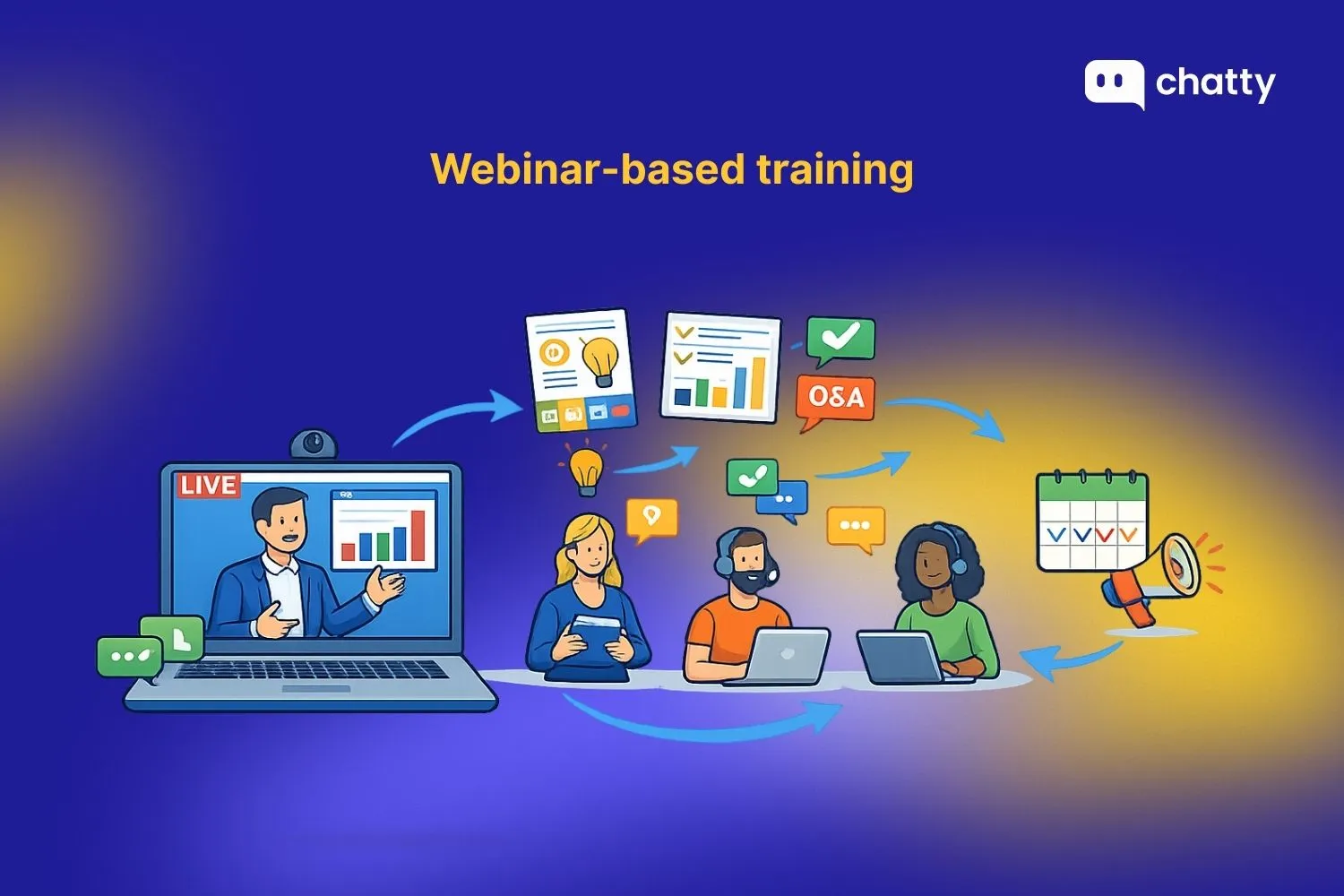
Webinars are live online sessions where a trainer presents information to participants through video conferencing platforms. They often include slides, demonstrations, polls, and question-and-answer segments. Webinars are useful for updating teams on new policies, product launches, or service improvements.
For example, a software company might host a webinar explaining new features and how support teams should communicate those updates to customers. Because webinars allow real-time interaction without requiring travel, they are cost-effective and efficient for large or geographically dispersed teams while maintaining engagement through live participation.
Virtual instructor-led training (VILT)
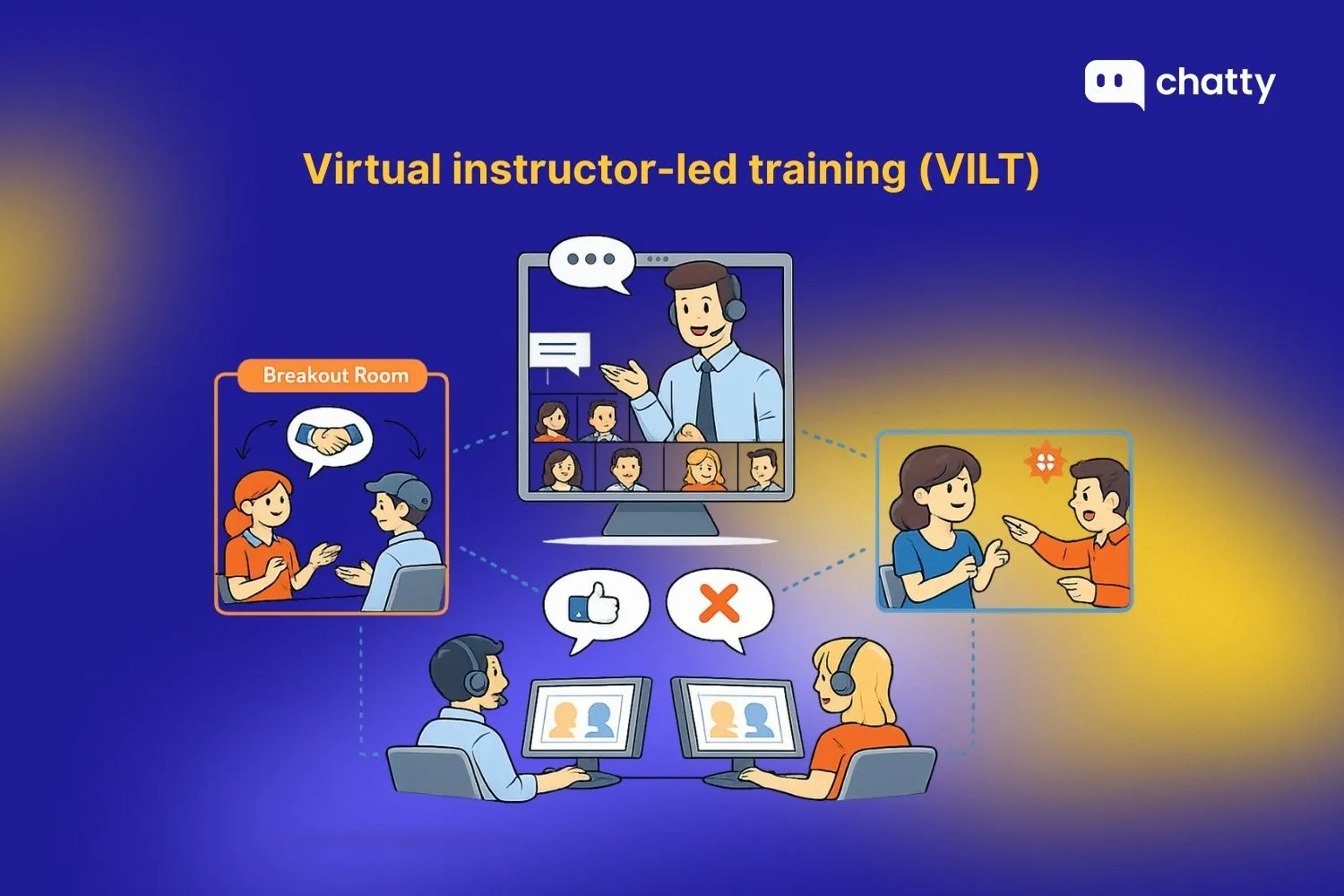
Virtual Instructor-Led Training combines the structure of classroom training with online delivery. Unlike basic webinars, VILT sessions are highly interactive and may include breakout rooms, role-play exercises, live discussions, and collaborative activities. Participants engage directly with the instructor and with each other.
For example, a company might conduct a two-day virtual training program on service excellence, where teams practice scenarios in breakout groups and receive immediate feedback. VILT is effective for remote organizations because it maintains structured learning and interaction while offering flexibility and accessibility across different locations.
On-the-job coaching and feedback
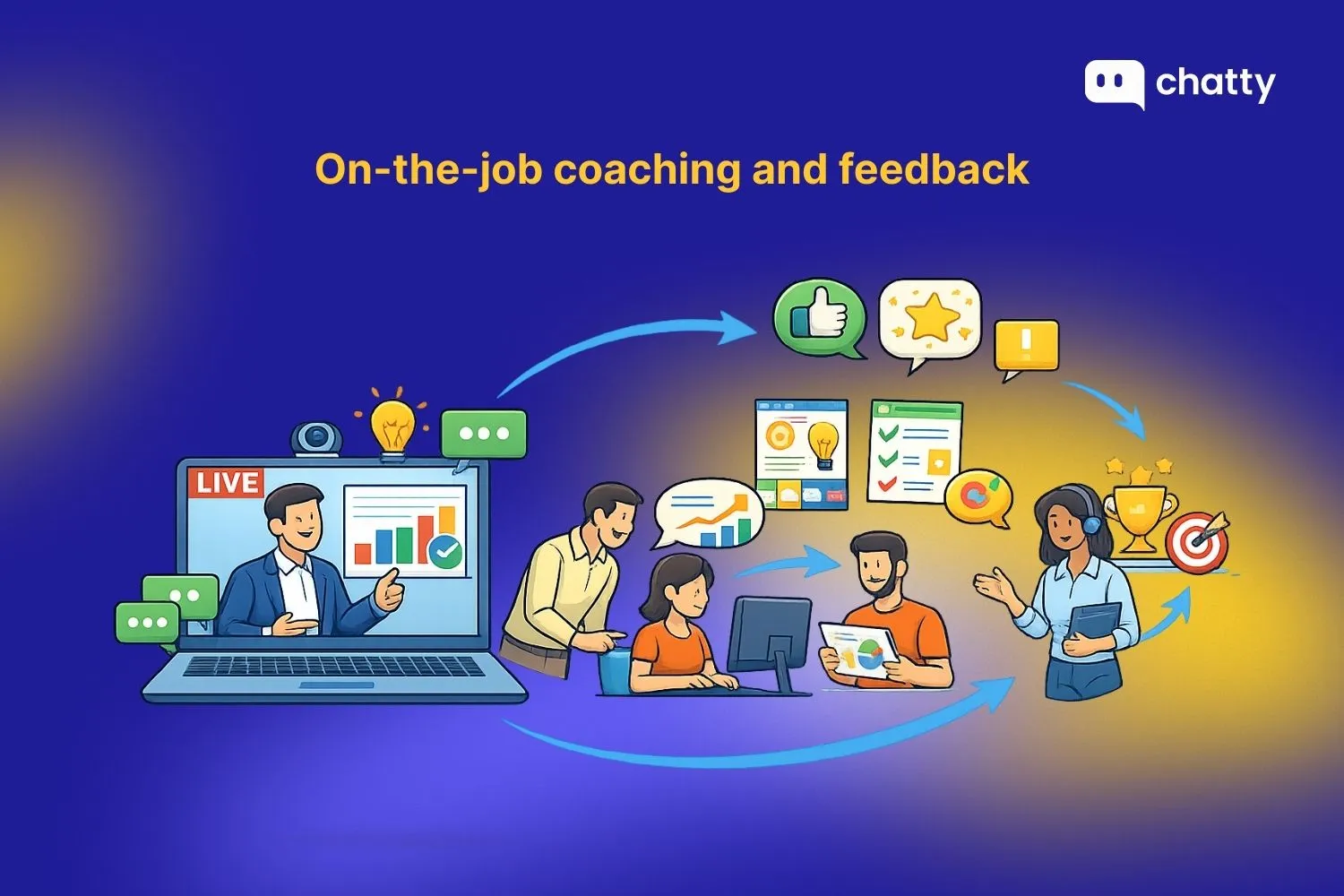
On-the-job coaching happens during daily work activities. Supervisors or team leaders observe interactions and provide immediate feedback. This method focuses on real performance rather than simulations.
For example, a manager may review recorded support calls and discuss the employee's strengths and areas for improvement afterward. Coaching helps employees refine their communication style, improve efficiency, and correct mistakes quickly. Regular feedback sessions build accountability and continuous development.
This method is practical and results-driven because learning occurs directly through real customer interactions rather than in isolation from daily responsibilities.
Performance support tools (EPSS)
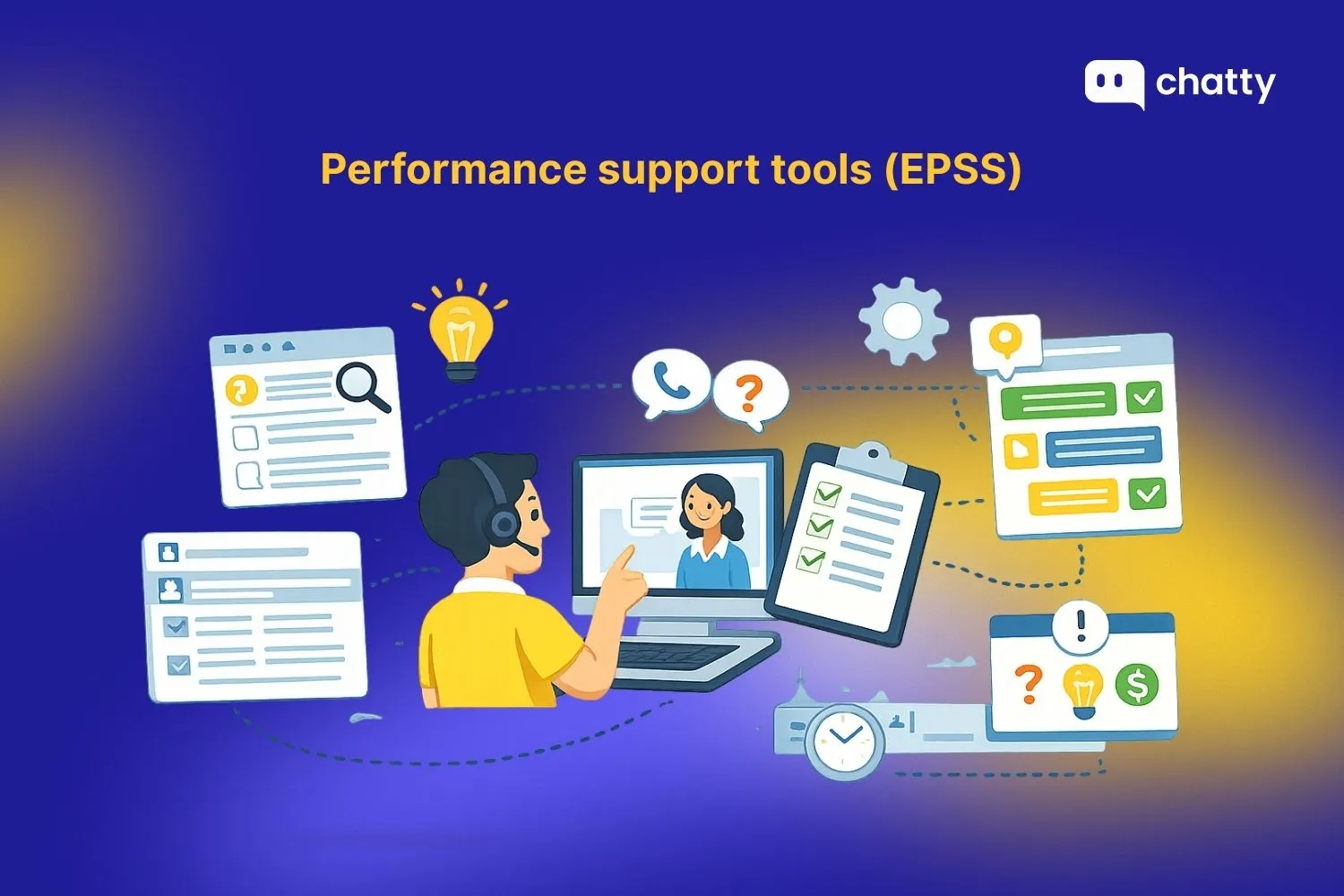
Performance Support Tools, often called Electronic Performance Support Systems, provide real-time assistance to employees as they work. These tools may include knowledge bases, guided scripts, checklists, or automated prompts within software systems. Instead of memorizing every policy, employees can quickly access accurate information during customer interactions.
For example, a support platform might display step-by-step troubleshooting guidance when an agent selects a specific issue. EPSS reduces errors, shortens response time, and increases confidence. This method supports continuous learning by delivering help exactly when it is needed, improving both efficiency and service quality.
How to choose the right type of customer service training
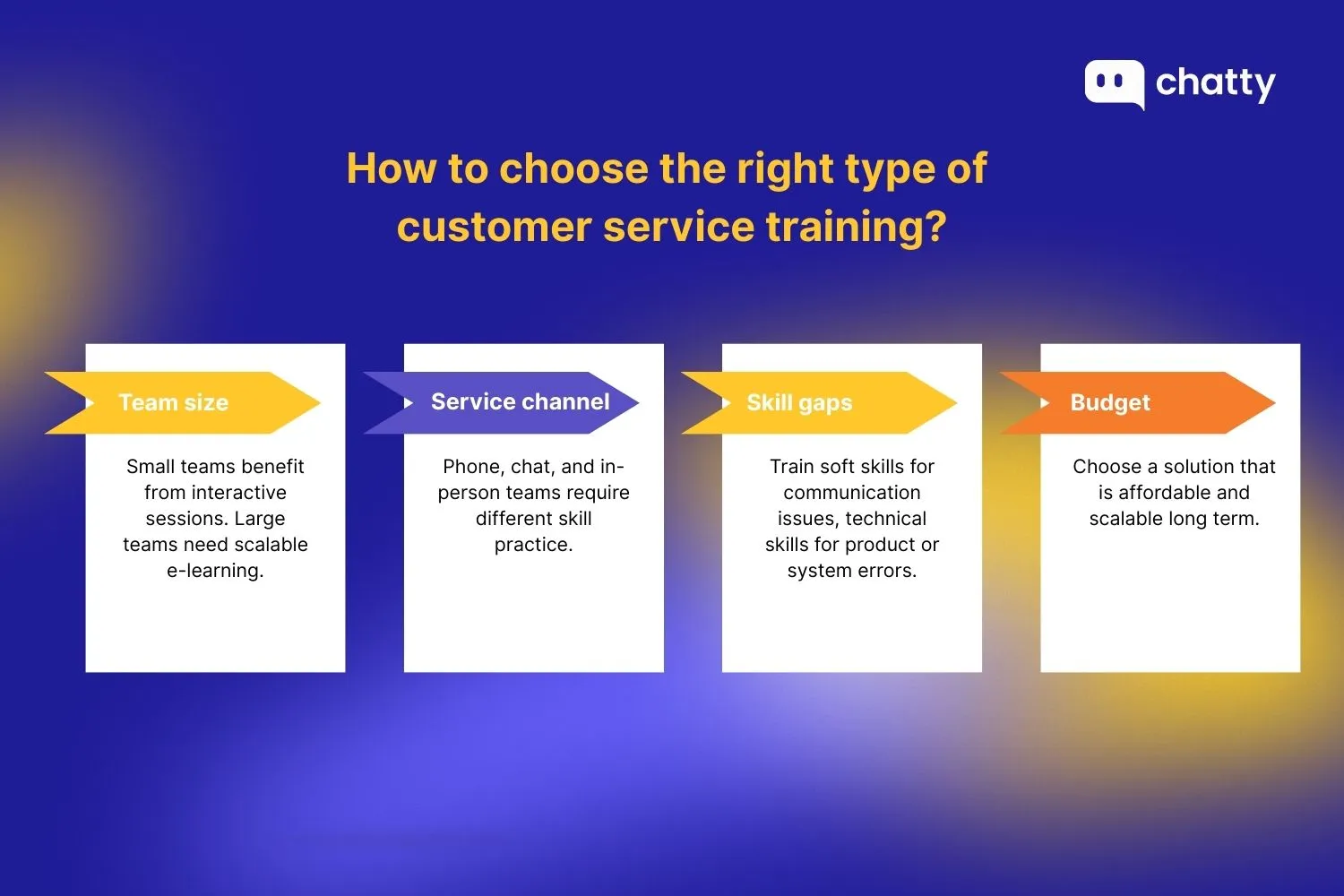
The following factors help you make a practical, results-focused decision.
Consider your team size and structure
Team size directly affects how training should be delivered.
For small teams, flexible options such as live workshops or short online courses often work best. These allow for discussion, role-play, and immediate feedback without heavy coordination. Managers can also tailor sessions to specific customer challenges the team faces daily.
For larger teams, consistency becomes critical. Standardized e-learning modules, internal training libraries, and structured onboarding programs help ensure everyone receives the same message and service standards. In this case, choose scalable systems that allow progress tracking, assessments, and easy updates as procedures change.
Align training with your primary customer channel
Different service channels require different skill sets.
Phone-based teams need training in tone control, call structure, objection handling, and active listening. Practical exercises should include call simulations and feedback on clarity and pacing.
Chat and email teams must focus on concise writing, response time management, and clarity in problem resolution. Training should include rewriting exercises and response quality reviews.
In-person service teams benefit from awareness of body language, emotional control, and real-time conflict management through scenario-based role-play.
Identify whether soft skills or technical skills need priority
Before choosing a program, analyze service performance data. If complaints involve attitude, miscommunication, or escalation issues, soft skills training should be the first step. This may include empathy development, de-escalation techniques, and stress management strategies.
If issues stem from incorrect information, slow system use, or product misunderstandings, technical training will have a faster impact. Focus on product knowledge refreshers, workflow efficiency, and system navigation practice.
Evaluate budget and scalability
Training must be sustainable. Instructor-led sessions can be highly engaging but may be expensive if repeated frequently. Online or blended learning solutions reduce long-term costs and allow new employees to onboard quickly.
When deciding, calculate the cost per employee, frequency of retraining, and the ability to update content as your business evolves. The most effective training is not simply affordable today but scalable for future growth.
The types of customer service training content that will beef up your employee training program
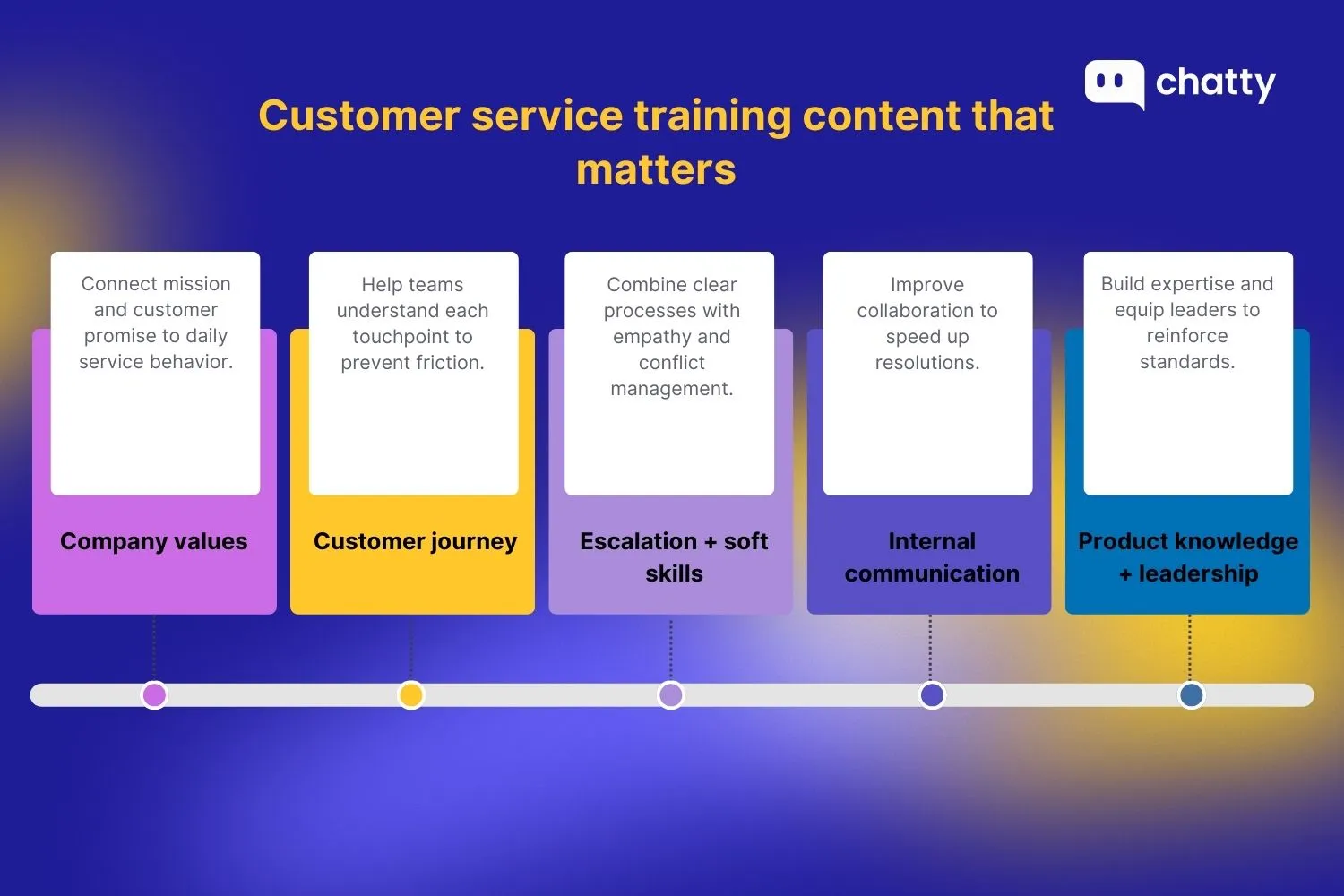
The strength of your customer service training program depends on the relevance and quality of the content you deliver to your employees.
Company values, mission, and customer promise
Customer service training should begin with your organisation's values, mission, and vision. Employees need to clearly understand what the company stands for and how their daily responsibilities affect customer perception. Training content should connect these principles to real workplace scenarios so staff can see how brand promises translate into behaviour. When employees internalise these values, they are more likely to act consistently and reinforce a customer-centric culture.
Customer onboarding and journey understanding
Your training should explain how customers move through each stage of their journey, from first contact to long-term loyalty. A structured customer onboarding process ensures new customers receive consistent guidance and support from the start. When employees understand the full onboarding process and the role each department plays, they can anticipate potential friction points and respond proactively. Including real examples from customer feedback helps make this content practical and relevant.
Issue escalation and soft skills development
Clear escalation processes are essential, but procedures alone are not enough. Employees must also develop soft skills such as active listening, empathy, and conflict management. Short, focused training modules are particularly effective, with micro-learning shown to improve knowledge retention by up to 50%. Combining process clarity with interpersonal skills ensures issues are resolved efficiently and professionally.
Inter-department communication
Customer experience often breaks down due to poor internal communication. Training content should clarify how information flows between teams and what standards guide internal collaboration. When departments understand expectations and communication protocols, customers experience faster resolutions and fewer repeated explanations.
Product knowledge and leadership development
Employees must have a strong understanding of the products or services they support. Training should include clear explanations of features, benefits, and common customer concerns. In addition, leaders need specialised training to reinforce customer service standards, coach teams effectively, and model customer-first behaviour. Strong leadership ensures that customer service principles are sustained across the organisation.
Best blended approaches using multiple training types
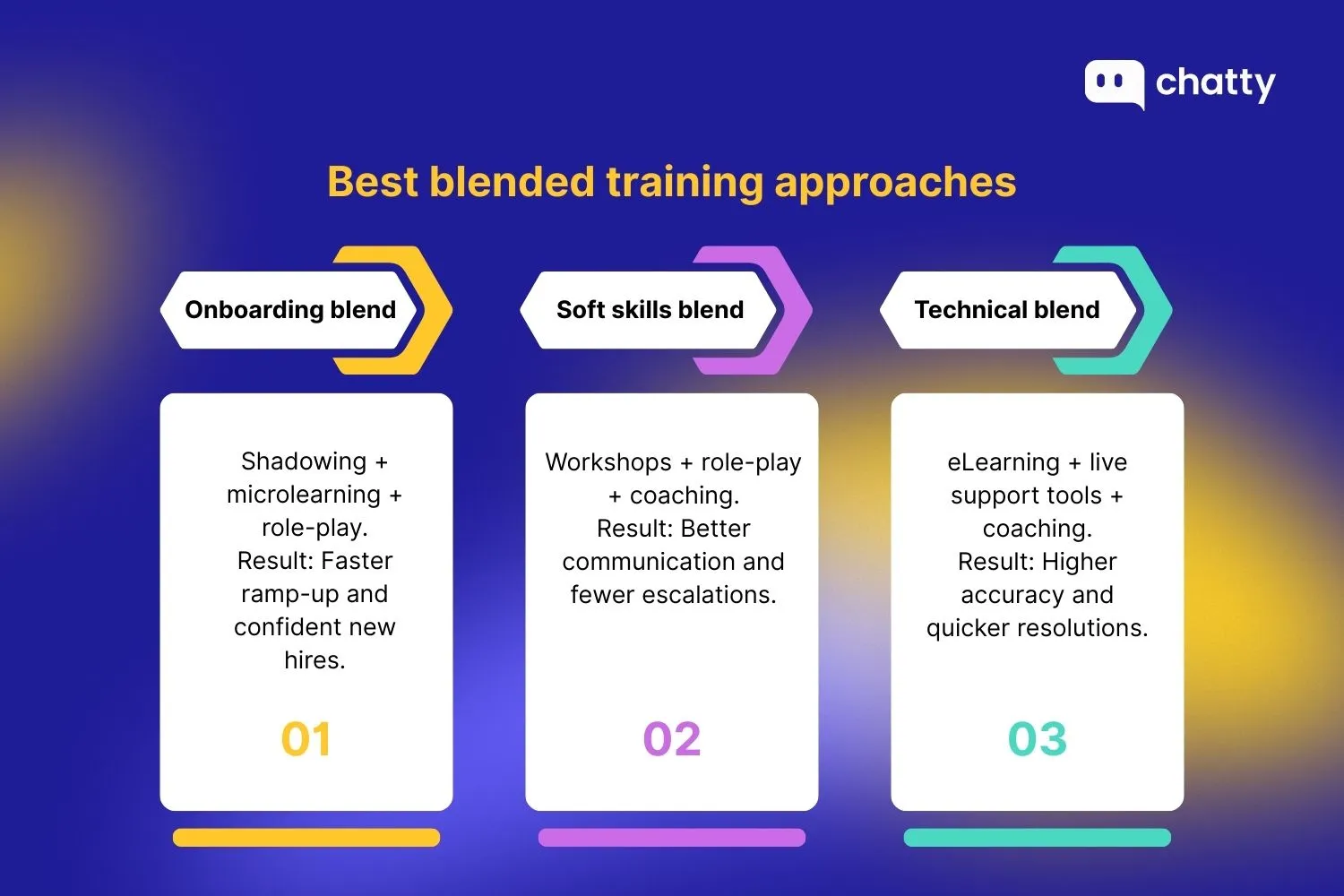
No single customer service training method works effectively on its own. Real performance improvement happens when workshops, eLearning, and coaching are combined to reinforce learning and support real-world application.
Blended Approach #1: Onboarding Blend
This approach is best suited for new hires who need to build confidence quickly while learning company standards. It combines shadowing, microlearning, and role-play to create a structured yet practical introduction to customer service expectations.
Shadowing allows new employees to observe experienced team members handling real customer interactions. Microlearning modules then reinforce key knowledge in short, focused sessions that are easy to complete and revisit. Finally, role-play gives new hires a safe space to practise responses, receive feedback, and refine their approach before managing live situations independently.
The outcome is a faster ramp-up period and more consistent service delivery. New employees gain both procedural understanding and behavioural confidence, reducing early mistakes and improving overall customer experience from the start.
Blended Approach #2: Soft Skills Blend
For communication, empathy, and de-escalation training, a combination of workshops, role-play, and coaching produces the strongest results. Workshops introduce core principles such as emotional intelligence, active listening, and conflict management. However, discussion alone is not enough to change behaviour.
Role-play sessions allow employees to practise handling difficult customers and emotionally charged scenarios. Follow-up coaching sessions ensure that managers provide personalised feedback based on real interactions. This reinforcement helps translate learning into daily habits.
The result is improved empathy, fewer escalations, and stronger customer satisfaction scores. When employees feel supported and guided, they are more confident in managing complex conversations without damaging customer relationships.
Blended Approach #3: Technical Support Blend
For teams that manage complex systems, compliance requirements, or structured processes, a technical blend works best. This includes eLearning for foundational knowledge, electronic performance support systems for real-time guidance, and case-based coaching to refine judgment.
eLearning ensures consistent understanding of procedures and policies. Performance support tools provide step-by-step assistance during live interactions, reducing reliance on memory alone. Case-based coaching then helps employees analyse past cases, identify mistakes, and improve decision-making.
The outcome is faster resolution times, improved accuracy, and fewer operational errors. By combining structured learning with real-world reinforcement, organisations create a training ecosystem that supports both efficiency and service excellence.
The Bottom Line
There is no single best approach among the types of customer service training. The most effective programs combine methods based on team size, channels, and skill priorities. By blending instructor-led sessions, digital learning, coaching, and performance tools, companies can reinforce knowledge and improve real-world application. When training aligns with business goals and customer expectations, it drives measurable improvements in CSAT, resolution speed, employee confidence, and long-term customer loyalty.