











Re:amaze is a multi-channel helpdesk for ecommerce stores, and it is well reviewed. You are probably not here to escape a bad app.
You are here because of how the AI is sold. Your allowance of AI resolutions is handed out per person on the account rather than per conversation your store receives.
So you line the options up by monthly price, and that is where it goes wrong. The same store with the same AI workload can pay more on a pricier plan. What sorts this list is what sets your AI ceiling:
- Your headcount, where the allowance scales with people hired.
- A budget, charged one resolution at a time.
- A separate AI pack, bought as a fixed block.
- Your store, with no seat fee for AI to couple to.
- Nothing, on the free baseline that meters no AI.
Match that to how your store generates chat volume, and the shortlist gets short fast.
- The plan ladder is the expensive way to buy AI
Each extra included resolution costs $4.00 stepping up to Pro and $2.00 stepping up to Plus. Bought on its own, one costs $0.85.
- The same AI load costs more on the pricier plan
A three person store resolving 210 conversations a month pays $252.75 on Basic, $300.00 on Pro and $334.50 on Plus.
- Re:amaze is not the odd one out
Zendesk allocates AI the same way, 5 per agent per month on Team tiers, then charges $1.50 to $2.00 each.
- There is a free baseline
Shopify Inbox costs nothing at 4.6 stars across 5,502 reviews, though it is not a full email helpdesk.
- Two numbers here are not published
Re:amaze states no AI allowance for Starter, and Richpanel publishes no per AI conversation rate.
Why merchants look for Re:amaze alternatives
Most articles on this keyword open by listing everything wrong with Re:amaze. The data does not support that framing.
It holds 4.3 stars across 142 Shopify App Store reviews (read 24 August 2026) and runs on roughly 3,990 stores according to StoreLeads, which counts detected scripts rather than confirmed installs. It also does something most tools here cannot: it runs natively on Shopify, BigCommerce, WooCommerce and WordPress. And at $29 per team member, Basic already covers unlimited email, live chat and social.
So you are not looking for an escape route, you are looking for a better fit. Four structural reasons drive that:
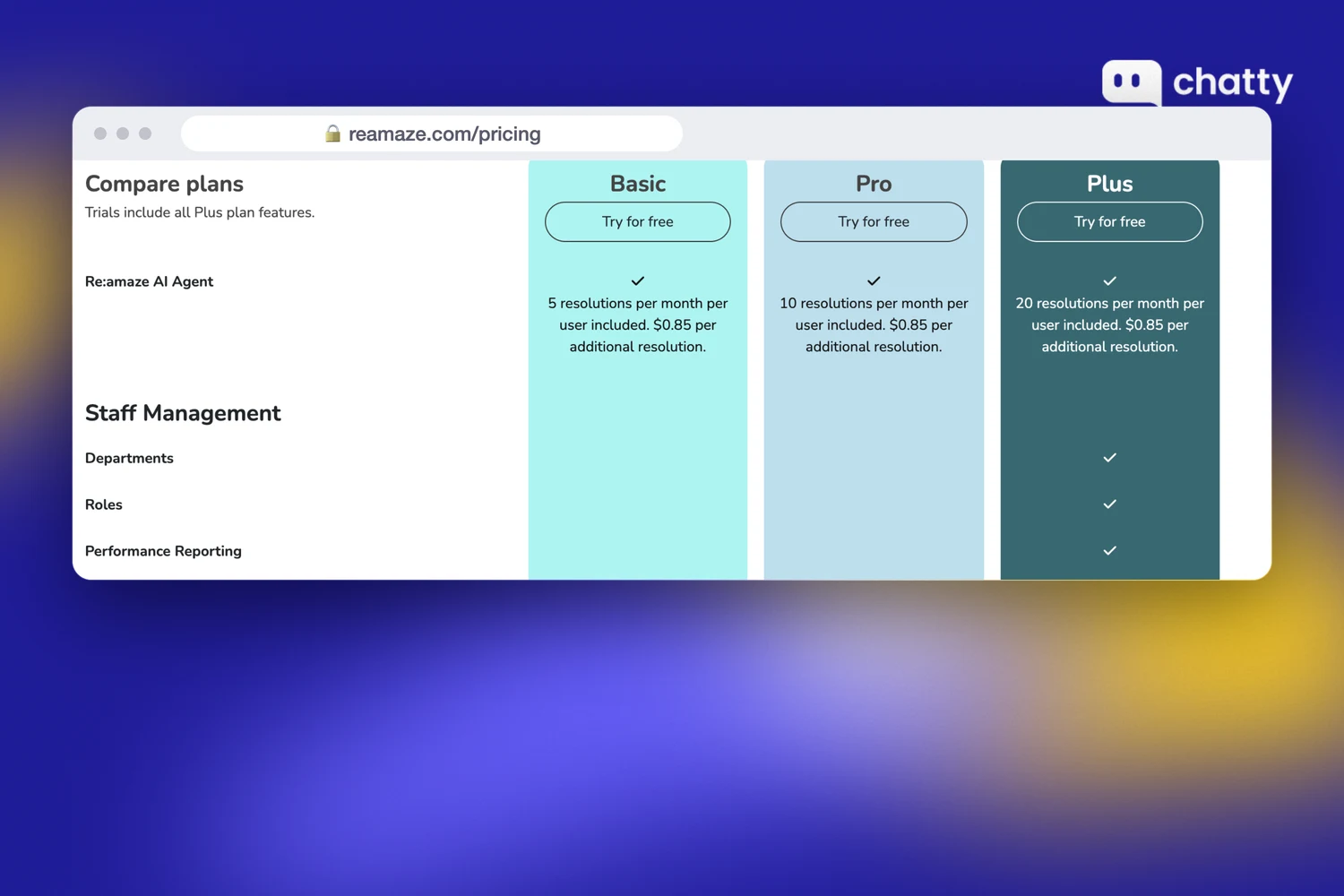
- The AI allowance is handed out per person. Basic includes 5 resolutions per month per user, Pro 10 and Plus 20, then $0.85 each (reamaze.com/pricing, read 24 August 2026). Your chat volume does not follow your payroll.
- The beta label is theirs, not ours. The AI Agent is marked
AI BETAon Re:amaze's own pricing page. Fair for a vendor to say about a young feature, and fair for a buyer to weigh. - There is no free tier, only a 14 day trial with no card required. If you want a free AI allowance that renews monthly, this is not that shape of plan.
- Channels are split across tiers. SMS and voice start at Pro. CSAT, in-chat video and Peek arrive at Plus.
None of that makes it weak, it makes it specific.
What a Re:amaze AI resolution actually costs
Take one store and price it on all four plans. The AI workload never changes, and the bill rises every time you move up a tier. Say the store has three people answering messages and its AI fully resolves 210 conversations a month:
| Plan | Seat cost | AI resolutions included | Extra resolutions at $0.85 | Monthly total |
|---|---|---|---|---|
| Starter, $59 flat | $59, unlimited team members | not published | not published | $59 plus AI, not published |
| Basic, $29 per member | $87 | 15, or 3 x 5 | 195 x $0.85 = $165.75 | $252.75 |
| Pro, $49 per member | $147 | 30, or 3 x 10 | 180 x $0.85 = $153.00 | $300.00 |
| Plus, $69 per member | $207 | 60, or 3 x 20 | 150 x $0.85 = $127.50 | $334.50 |
All prices read from reamaze.com/pricing on 24 August 2026, monthly billing. The Starter row is blank on purpose: Re:amaze publishes no AI allowance for it, and with unlimited team members there is no denominator for a per user figure, so guessing one would invent a number.
The reason the total climbs sits in the upgrade steps. Basic to Pro costs $20 more per user and buys 5 more resolutions per user, which is $4.00 each. Pro to Plus costs another $20 and buys 10 more, $2.00 each. As overage, one costs $0.85. Included resolutions run 2.35 to 4.7 times the price of ones you simply buy, so nobody should upgrade for the AI. People upgrade for SMS, voice and video, which is a good reason, just not an AI one. If this metering is new, our guide to how AI chat gets metered compares the models.
There is a real defence of $0.85. Divide Chatty's $0.40 per AI conversation by Re:amaze's $0.85 per resolution and the break even sits at 47 percent. Re:amaze bills only for conversations its AI finishes; per conversation pricing bills for every one the AI touches. If your AI fully resolves fewer than 47 percent of conversations, paying Re:amaze per resolution is cheaper, and that is a genuine point in its favour.
Re:amaze alternatives compared at a glance
Rows are sorted by what sets your AI ceiling, not by quality. Position says nothing about which tool is better.
| Tool | AI ceiling set by | Entry price | AI price per unit | Free plan | Rating / reviews | Platforms |
|---|---|---|---|---|---|---|
| Re:amaze | Headcount | $29 per member | $0.85 per resolution | No, 14 day trial | 4.3 / 142 | Shopify, BigCommerce, WooCommerce, WordPress |
| Chatty | Store, no seat fee | $19.99 | $0.40 per AI conversation | Yes, 50 a month, renews | 4.9 / 1,880 | Shopify |
| Zipchat | Store, no seat fee | $49 | $0.196 per reply | No | 5.0 / 161 | Shopify, WooCommerce, BigCommerce, Wix |
| Tidio | Separate Lyro pack | $24.17 | Lyro from $32.50 per 50 | No | 4.8 / 1,255 | Multi platform |
| Richpanel | Fixed AI reply allowance | $9 for 3 users | not published | No | 4.7 / 122 | Multi platform |
| Gorgias | Ticket volume, never per agent | $40 | $1.50 per automated interaction | No | 4.3 / 633 | Multi platform |
| Intercom | Budget, per outcome | $29 per seat | $0.99 per outcome | No, 14 day trial | 3.9 / 17 | Multi platform |
| Zendesk | Headcount, then budget | $19 per agent, annual | $1.50 to $2.00 | No | 3.5 / 77 | Multi platform |
| Shopify Inbox | No AI meter | $0 | None | Yes, free | 4.6 / 5,502 | Shopify |
Every price comes from the vendor's own pricing page and every rating from the Shopify App Store, all read on 24 August 2026; Chatty from chatty.net/pricing on 21 August 2026, unchanged since. One evidence standard for all nine rows. Read down the second column rather than the third and the list falls into three groups:
Re:amaze alternatives with no seat fee to couple to
This group leads for a structural reason, not a quality one. It is the only group that removes both things Re:amaze charges for, the per person fee and the per resolution fee, because there is no seat fee for an AI allowance to attach to. Both tools keep selling when nobody is at the desk, a different problem from what chat does after hours:
Chatty
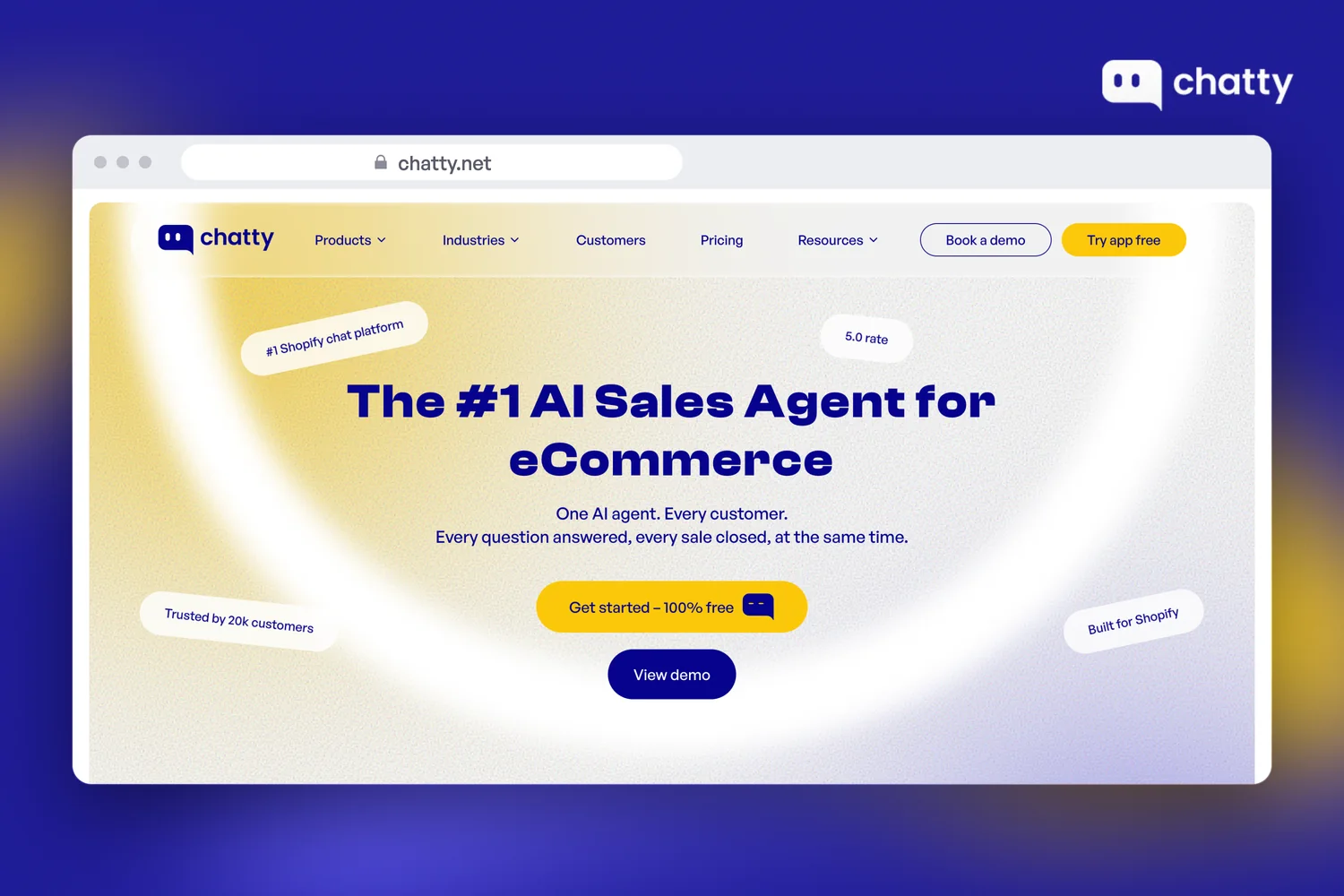
Chatty bills per store rather than per person, so the member count on each plan is a ceiling rather than a line on the invoice. Free is $0 for 50 AI conversations a month, renewing. Basic is $19.99 for 100 conversations and 5 members, Pro $68.99 for 500 and 10 members, Plus $199 for 1,000 and unlimited members. Overage is $0.40 per AI conversation with a spend cap you set in the app, and human conversations are unlimited on every plan. It holds 4.9 stars across 1,880 Shopify reviews (read 17 September 2026).
The plan price also covers Chatty Helpdesk, with no separate fee. Turn on Helpdesk ticket mode for a support email address, and incoming emails become tickets. Each ticket gets a priority from Low to Critical, an assignee and a status of Open, Pending, Snoozed or Resolved.
Agents can reply, send and close, snooze, forward or leave an internal note. Any chat in the Inbox can also be converted into a ticket on desktop. The Helpdesk docs list no SLA policies, macros, automation rules or helpdesk reporting, and tickets come only from email or manual conversion.
The difference shows up twice. Take that three person store wanting AI to handle 240 conversations a month. Re:amaze Pro includes 30, so the other 210 cost $178.50 in overage on top of $147 of seats, or $325.50. Chatty Pro is $68.99 and includes 500. Now grow the team from three to six: Re:amaze Pro adds three seats at $49, so $147 more every month for the same AI, while Chatty Pro adds $0, because $68.99 already covers ten members.
On the support side it runs a shared inbox with Your inbox, Unassigned and AI tabs, auto assignment, and Gmail and Outlook channels with AI replying on email. It also tags conversations by topic and has a Zendesk integration that opens a ticket with the transcript once a conversation resolves.
Zipchat
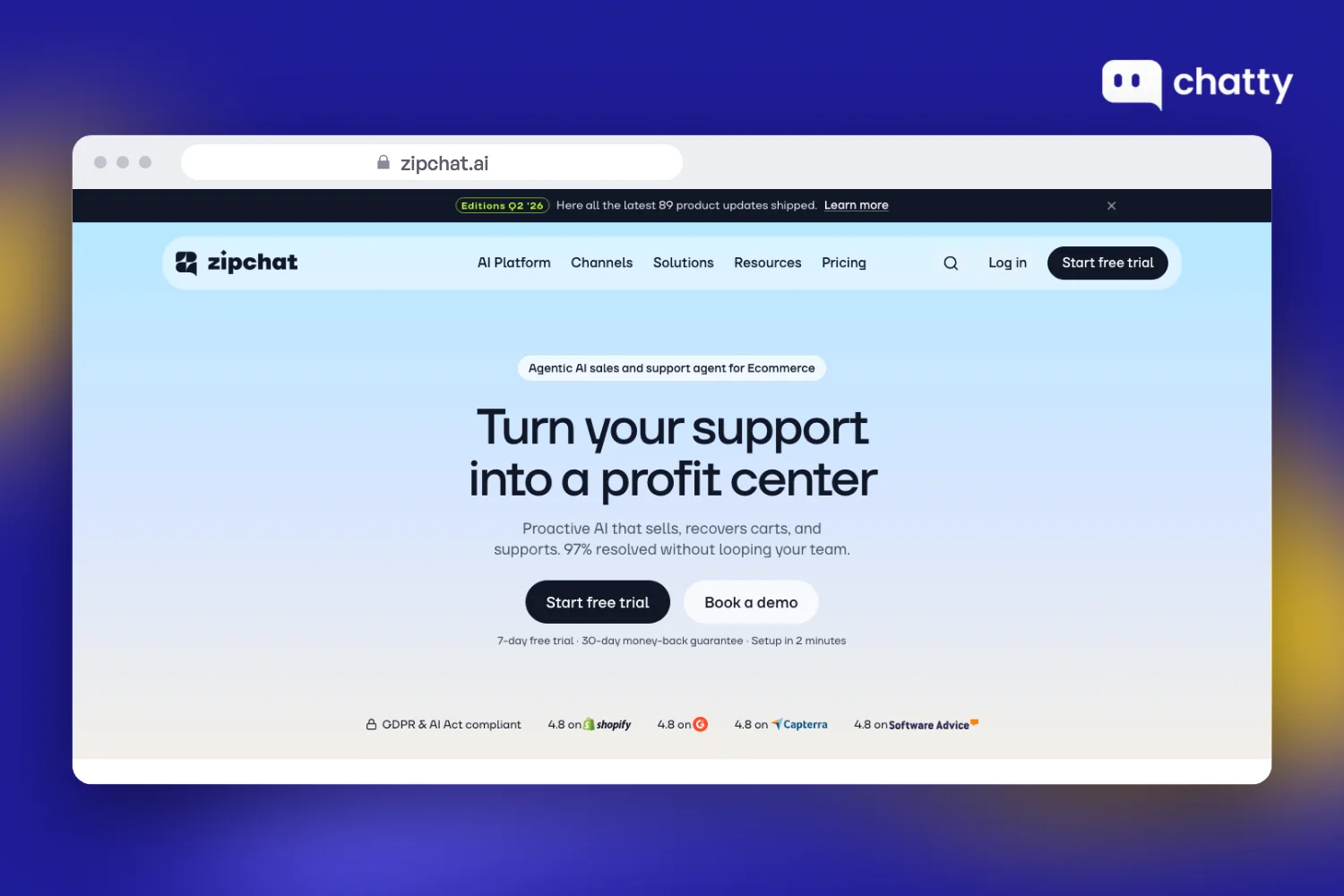
Zipchat meters replies, not conversations, so your ceiling is a reply budget rather than a payroll. Entry is $49 a month for 500 replies, which Zipchat translates to "around 200 conversations per month". More cost $49 per 250, roughly $0.196 each. No free plan. It holds 5.0 stars across 161 Shopify reviews (read 24 August 2026), the highest rating here, and runs on Shopify, WooCommerce, BigCommerce and Wix.
The catch is easy to miss: those tiers apply to stores under 25,000 monthly visitors, and the pricing page asks your visitor count first, so a high traffic store is not looking at these numbers. Tools priced per conversation do not gate tiers on traffic at all.
The catch in this group is not shared. Chatty runs on Shopify and nowhere else, so selling on BigCommerce, WooCommerce or WordPress rules it out on the first question, while Zipchat carries no such limit. And neither tool here sells SMS or voice, both of which Re:amaze offers from the Pro plan up.
Re:amaze alternatives that sell AI as a separate pack
The tools here do something Re:amaze does not: they sell the AI as its own product with its own allowance, bought as a fixed block and priced apart from whatever meter runs the rest of the inbox. That gives you a number you can budget a quarter ahead. It also gives you a second meter to watch:
Tidio
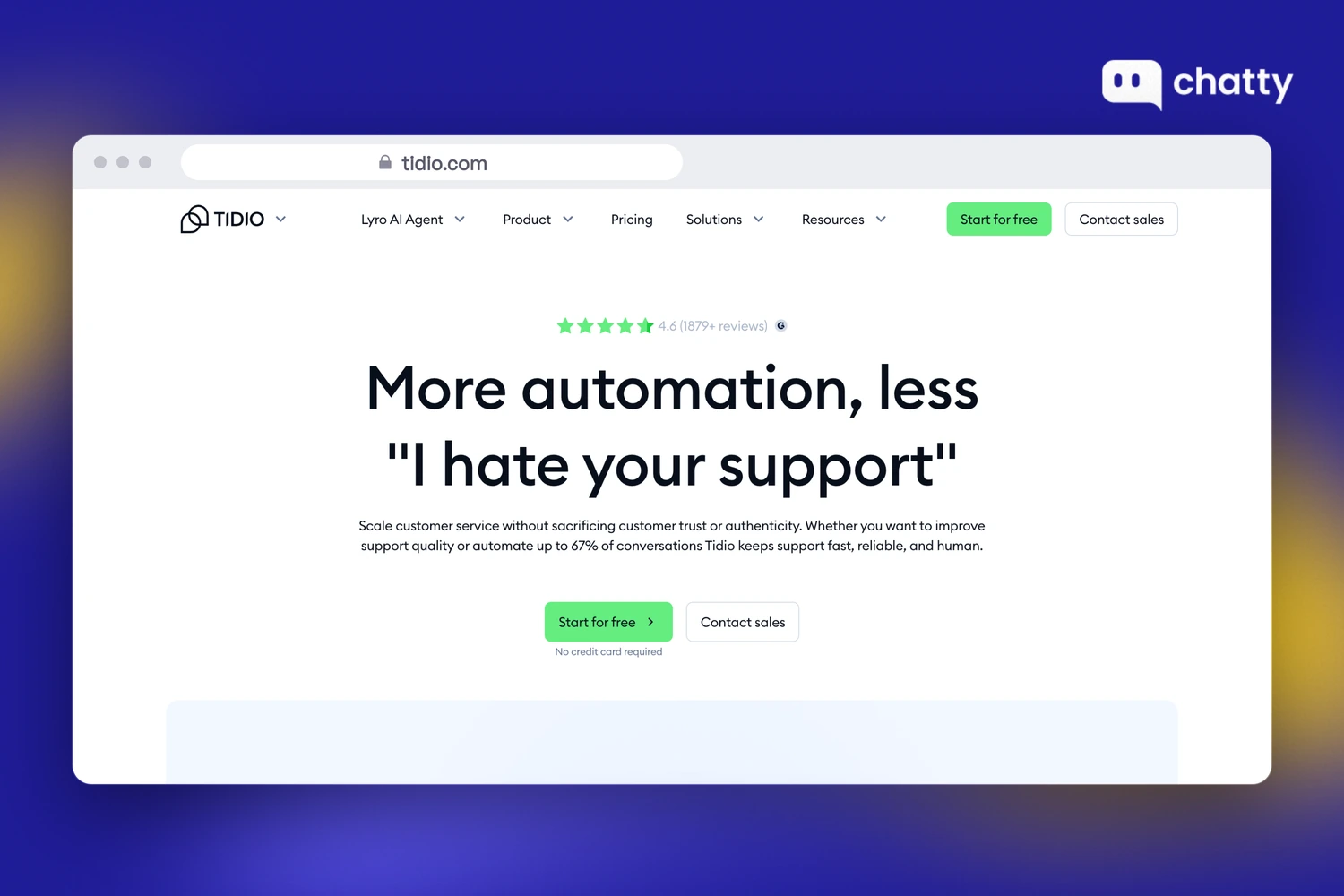
Tidio bills the inbox by billable conversation, not by seat. Starter is $24.17 a month for 100, Growth from $49.17 for 250, Plus from $300. The AI is separate: Lyro is an add-on from $32.50 for 50 AI conversations, and Tidio sells it standalone to bolt onto Zendesk, Salesforce or another helpdesk. Starter ships 50 Lyro conversations, though as a one-off rather than a monthly renewal. It holds 4.8 stars across 1,255 reviews (read 24 August 2026) and is not tied to Shopify.
The catch is those two meters running side by side. Running out of billable conversations stops you, running out of Lyro conversations stops the AI, and neither one covers for the other.
Richpanel
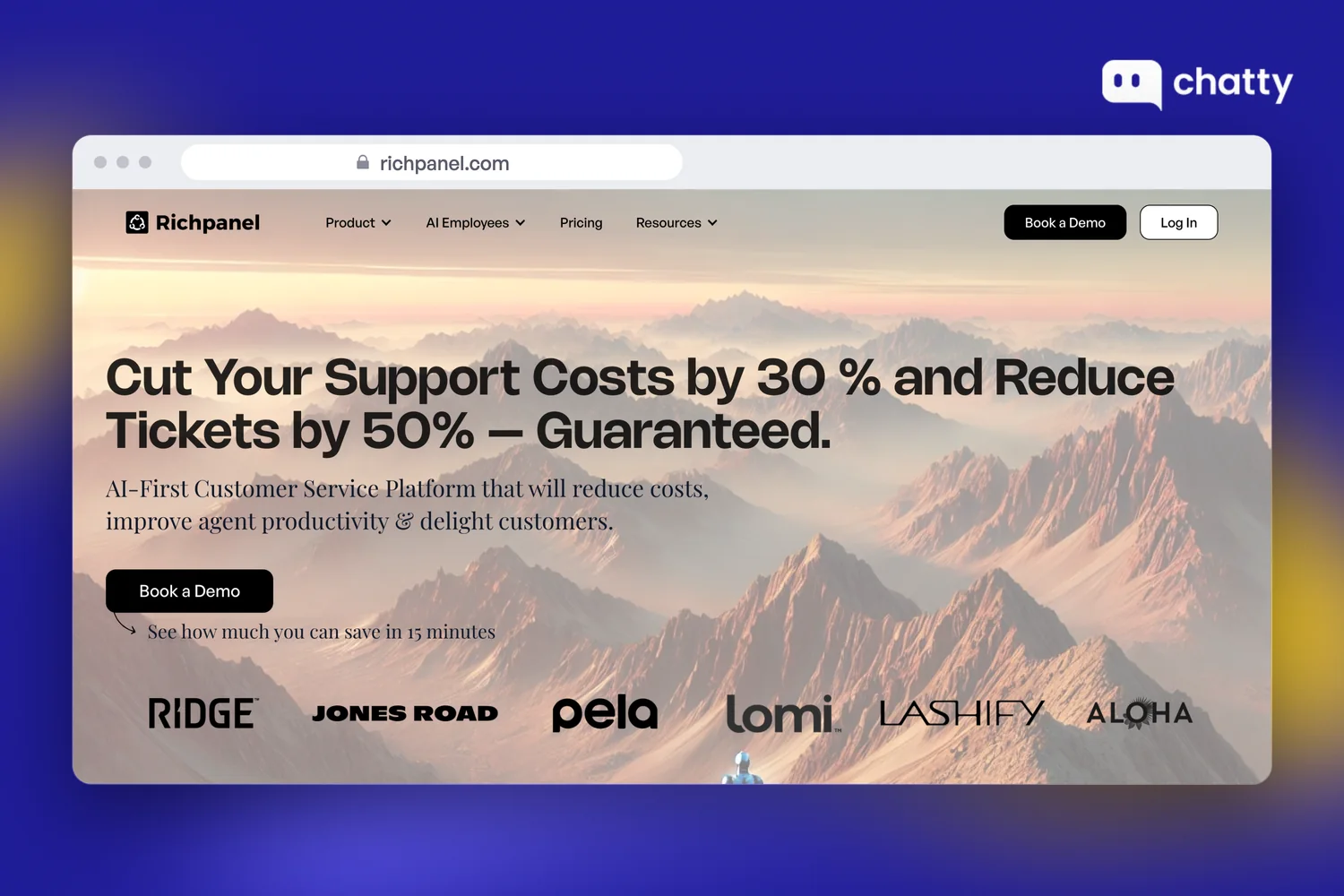
Richpanel sells AI as a hard allowance per tier, so you know your ceiling in advance but cannot top up one unit at a time. In the "Help Desk (For agents)" table, Base is $9 a month for 3 users with up to 50 AI Assisted Replies, Pro $60 per user per month ($50 annually) with up to 200, and Pro Max $120 per user ($100 annually) with unlimited. No free plan in that table. It holds 4.7 stars across 122 reviews (read 24 August 2026); some third party sources say 127, the Shopify listing says 122.
Two things to flag. Richpanel publishes no per AI conversation rate at all, so any article quoting one has made it up. And its pricing page carries more than one plan table, and they do not agree, which is why the table name matters above.
Buying AI as a pack gives you a number you can plan against rather than a bill that moves with usage. That fits stores whose chat volume is steady enough to size a pack once and leave it alone.
Re:amaze alternatives that sell AI by the resolution
What these three share is not how they charge for the platform, which differs completely, but how they charge for the AI: one unit at a time, every time it finishes something. Gorgias states on its own pricing page that it is "never priced per agent" and bills by ticket. Only Zendesk allocates AI by headcount the way Re:amaze does, the most useful fact here:
Gorgias
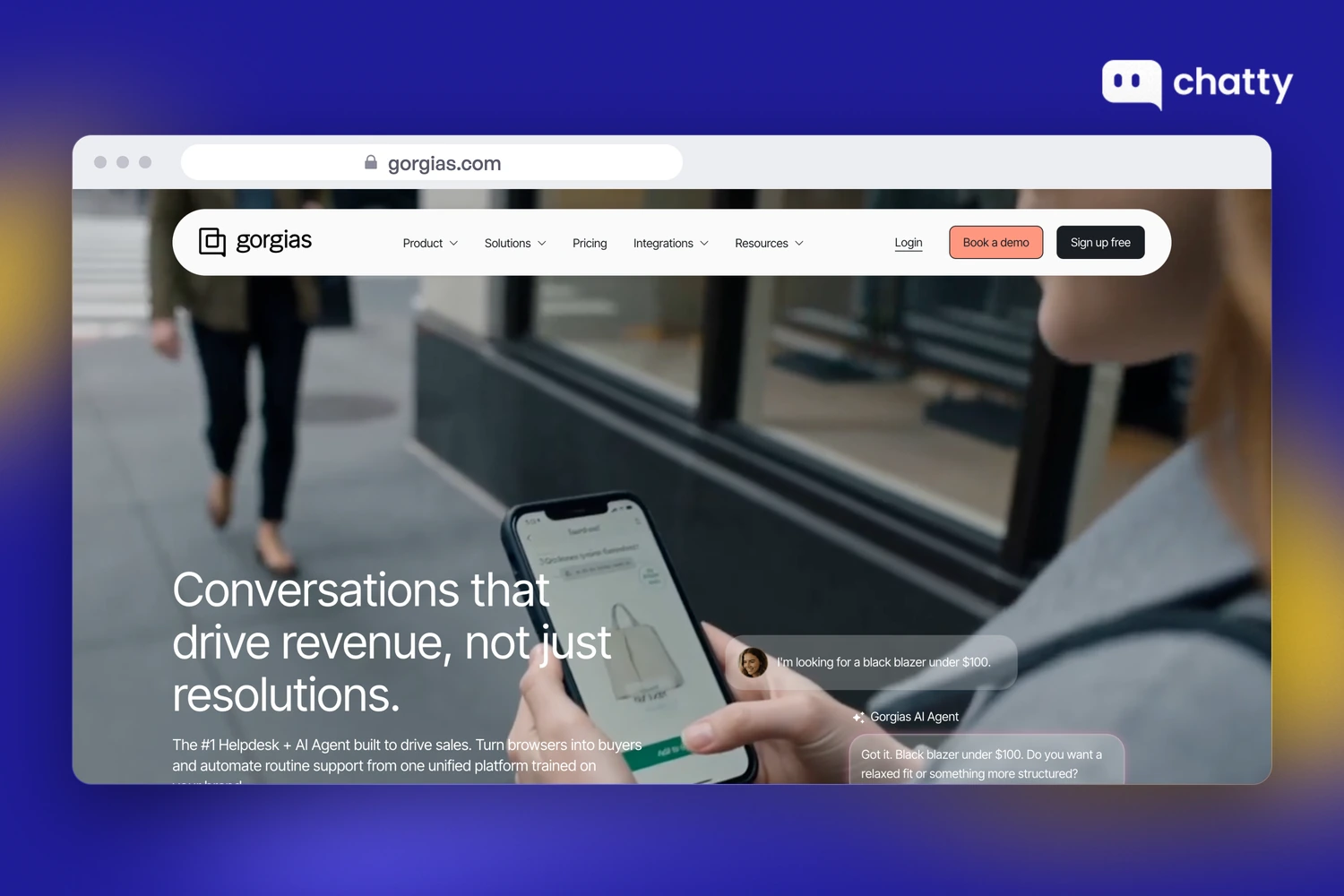
Gorgias removes the seat fee entirely and ties everything to ticket volume, so the bill follows the work not the payroll. Starter is $40 a month for 50 tickets and 30 automated interactions, Basic $90 ($77 annually) for 300 tickets, Pro $550 ($471 annually) for 2,000, Advanced $1,430 ($1,227 annually) for 5,000. AI beyond the allowance is $1.50 per automated interaction, and extra tickets are $0.40 or $0.36 depending on tier. Starter includes 3 user seats and the rest 500, none charged for. It holds 4.3 stars across 633 reviews (read 24 August 2026) and is multi platform.
The catch is the size of the steps in that ticket-based helpdesk pricing. Basic to Pro is $90 to $550, so crossing 300 tickets is a jump rather than a step. Our Chatty vs Gorgias comparison works through what that means for a growing store.
Intercom
Intercom is the purest version of this model, and its number is the one to hold Re:amaze's $0.85 against. Fin, its AI agent, is priced at $0.99 per outcome, Intercom's own word for the unit. An outcome counts when the customer confirms they are sorted, stops asking, or Fin completes a workflow. Seats are $29 on Essential, $85 on Advanced and $132 on Expert, with Fin on all three. No free plan, only a 14 day trial, and 3.9 stars across 17 Shopify reviews (read 24 August 2026).
The catch is that you are billed on more than one layer, seats plus outcomes, and the seat layer keeps running no matter how much the AI takes on. On the head to head number though, at $0.85 against $0.99, Re:amaze is 14 cents cheaper per resolved case, and it wins that one.
Zendesk

Zendesk is the reason to stop treating Re:amaze as an oddity. It uses the same mechanism: an AI allowance per agent per month, then a per unit charge after that. The unit is the automated resolution, a request the AI resolved without escalating to a person. Team tiers include 5 per agent per month, Growth and Professional 10, Enterprise 15. Beyond that it charges $1.50 committed or $2.00 pay as you go. Seats start at $19 per agent per month billed annually ($25 monthly), rising to $55, $115 and $169 on Suite tiers. No free plan, and 3.5 stars across 77 Shopify reviews (read 24 August 2026).
The catch, for anyone leaving Re:amaze to escape headcount-linked AI, is that this is the same design at a higher price: $1.50 is 1.76 times $0.85, and $2.00 is 2.35 times it. Re:amaze sells the identical mechanism more cheaply. What Zendesk offers in exchange is enterprise reporting and SLAs that smaller helpdesks do not attempt.
Paying by the resolution puts you back in Re:amaze's own model with a different number on the meter, so this group fits when the thing you want to change is the AI and not the way you run support.
Shopify Inbox: the free Re:amaze alternative to beat
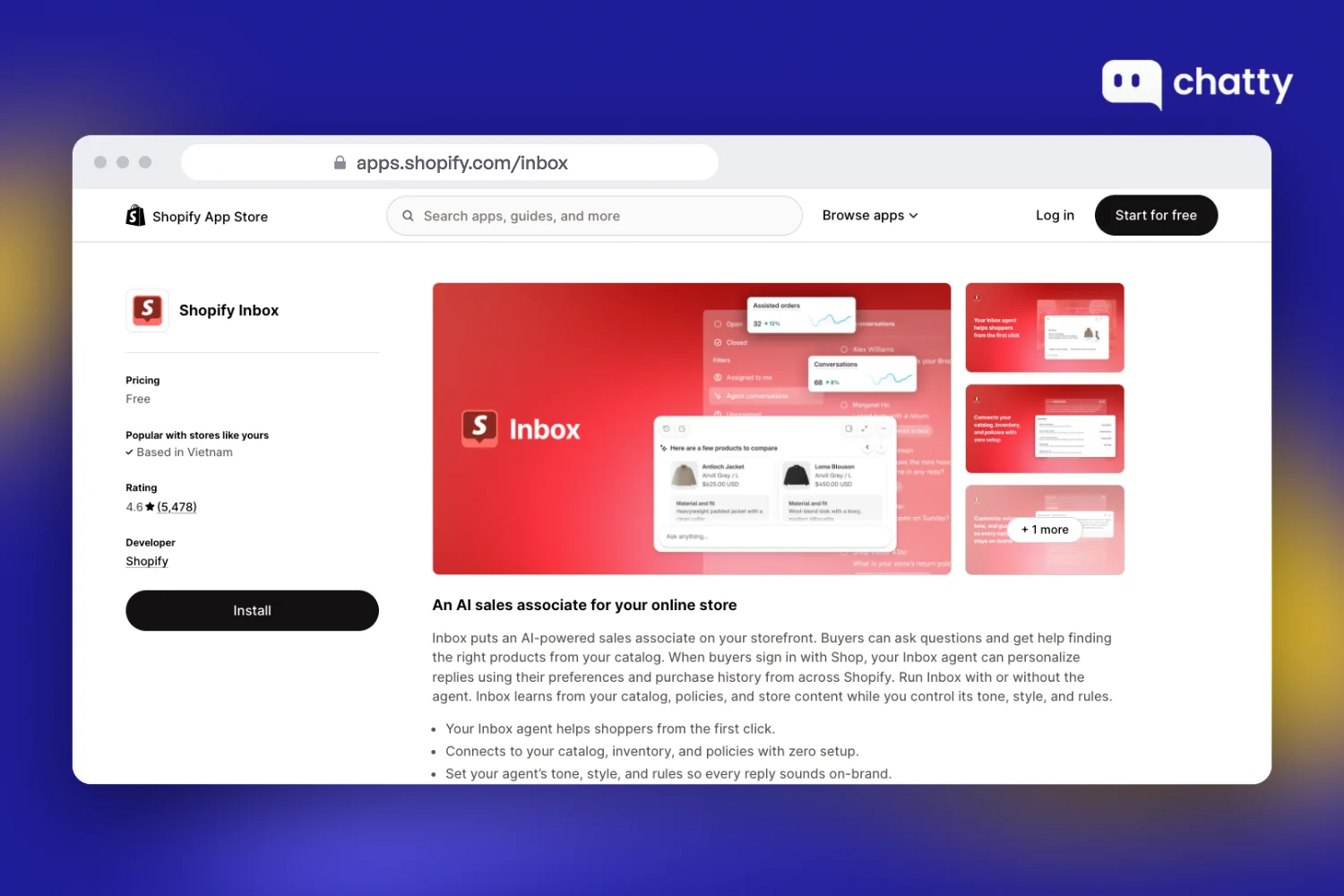
Shopify Inbox is the only option here with no AI meter of any kind. It costs $0, has no paid tier, and holds 4.6 stars across 5,502 reviews (read 24 August 2026), the largest review count here by a wide margin. Most comparison articles leave it out, and the reason is not editorial: it pays no affiliate commission.
It is also genuinely narrower than Re:amaze: not a full email helpdesk, no SMS and no voice. Before shortlisting anything paid, be specific about what the free tier leaves out for your workflow.
If what you need is a chat box on a Shopify store and you would rather not pay for one, this is the benchmark everything else has to beat, not a consolation prize.
Which Re:amaze alternative fits your store
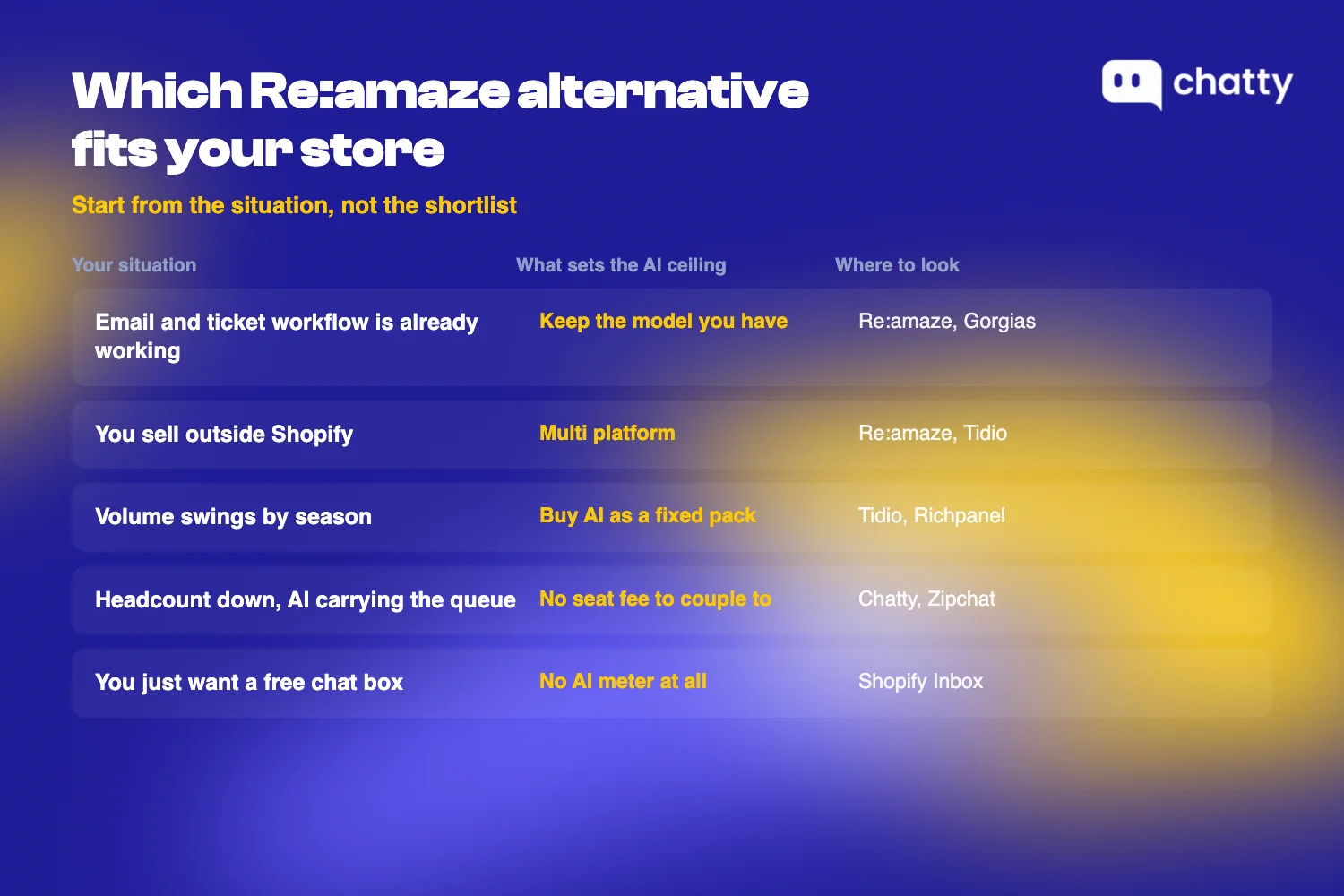
The question is not which tool is best. It is what sets your AI ceiling now, and whether you want to change that thing at all. Six cuts, in the order worth asking them:
- Is support mostly email and tickets, and already working? Stay on Re:amaze, or take the per resolution group if only the AI needs replacing.
- Do you sell outside Shopify? Stay on Re:amaze, which covers four platforms, or look at Tidio.
- Is headcount rising and do you need cheap, predictable seats? Re:amaze Starter, $59 flat with unlimited team members.
- Do you need reporting and SLAs for a team over ten? Zendesk.
- Is headcount falling, with AI expected to carry the queue? The no seat fee group, Zipchat or Chatty.
- Do you just want a free chat box on the store? Shopify Inbox.
Three things to check before you commit:
- Count last month's actual AI conversations rather than estimating. Every calculation above turns on that number, and it decides whether you sit above or below the 47 percent break even.
- Ask the vendor which price table applies to your account. At least one pricing page here carries more than one table, and they do not agree.
- Check what you would lose, not only what you would gain. If your team relies on Re:amaze SMS or voice, the no seat fee group does not replace it, and you may want a full helpdesk rather than a chat-first tool.
Your AI ceiling is set by whatever you agreed to buy. Change that, not vendors for its own sake.
Frequently asked questions
Because every vendor meters a different unit, so two articles can both be accurate and still reach opposite conclusions. This list alone has resolutions at $0.85 on Re:amaze, outcomes at $0.99 on Intercom, automated interactions at $1.50 on Gorgias and replies at about $0.196 on Zipchat. Four different things counted, none converting cleanly into the others. Many comparisons also mix annual prices with monthly ones without saying which. Ask what the unit is before you ask the price.
Yes, and Re:amaze states it plainly: 5 resolutions per month per user on Basic, 10 on Pro, 20 on Plus, then $0.85 each. But the consequence is not that you should hire people to get AI, which nobody would do. It is that upgrading does not rescue you either. Each extra included resolution costs $4.00 stepping to Pro and $2.00 stepping to Plus, against $0.85 outright. For that three person store resolving 210 conversations a month, the totals run $252.75, $300.00 and $334.50. To check your own position, work from a store's own resolution rate rather than a vendor estimate.
Two, and they differ in kind. Shopify Inbox is $0 with no AI meter at all, at 4.6 stars across 5,502 reviews. Chatty's free tier is $0 for 50 AI conversations a month, renewing. Compare Tidio Starter, which includes 50 Lyro conversations as a one-off rather than a monthly refill. Re:amaze has no free plan, only a 14 day trial with no card required. The question worth asking of any free tier is whether the allowance comes back next month.
Most of them, and this is where Re:amaze is strong rather than weak. Re:amaze runs on Shopify, BigCommerce, WooCommerce and WordPress. Zipchat runs on Shopify, WooCommerce, BigCommerce and Wix. Tidio, Richpanel, Gorgias, Intercom and Zendesk are all multi platform. The exceptions are Chatty and Shopify Inbox, both Shopify only, so a WooCommerce store rules out that pair immediately.
Yes. Chatty includes a Helpdesk on every plan, including Free. Turn on Helpdesk ticket mode for a support email address, and incoming emails become tickets.
Each ticket carries a subject, the customer's email, a priority from Low to Critical, an assignee and a status. Re:amaze goes further on channels and tooling, with SMS and voice from Pro and CSAT from Plus. A team that depends on those should weigh that before switching.
No. It holds 4.3 stars across 142 Shopify App Store reviews (read 24 August 2026), runs on roughly 3,990 stores, and covers four ecommerce platforms natively, more than most tools here manage. The reasons to look elsewhere are structural rather than qualitative: the AI allowance is issued per person, and the cheapest way to buy more sits outside the plan ladder rather than on it. And if your AI fully resolves fewer than 47 percent of your conversations, paying Re:amaze only for the ones it finishes is still the cheaper way to buy.