

The way businesses generate leads is changing: static forms are ignored, cold emails go unread, and generic CTAs no longer convert.
Today’s buyers move fast and expect brands to keep up. They want instant answers, authentic dialogue, and experiences that feel tailored. A single real-time exchange can make the difference: 82% of consumers say they’re more likely to convert after a live interaction.
That’s why forward-thinking teams are turning to lead generation chatbots. These digital representatives greet every visitor, ask intelligent questions, and automatically qualify intent. Instead of chasing leads after they leave, brands can connect while interest is fresh and intent is high.
In this guide, you’ll learn how to design, integrate, and optimize a chatbot that not only collects emails but also has a pipeline that’s ready to convert.
- Static forms and cold emails are losing the lead generation battle fast. Today's buyers expect instant, tailored dialogue — and 82% of consumers are more likely to convert after a live interaction.
- A lead generation chatbot qualifies intent in real time, not after the fact. By asking context-based questions about goals, timelines, and budgets, chatbots identify high-intent visitors while interest is still fresh.
- Chatbots eliminate the revenue leak caused by after-hours visitor drop-off. Operating 24/7 across time zones, chatbots ensure late-night and weekend visitors receive the same instant, personalized attention as anyone else.
- The real power of chatbots is what happens after the conversation ends. By syncing data directly into CRMs and triggering nurture workflows, chatbots equip sales teams with full context before any human outreach begins.
- Chatbots don't just collect emails — they build a pipeline ready to convert. Combining engagement, qualification, and seamless data integration turns a simple chat widget into a full-funnel lead generation engine.
What is a lead generation chatbot?

A lead generation chatbot is an AI-powered assistant that engages visitors in real time, gathers their information, and qualifies them as potential customers. Rather than waiting for users to fill out static forms or check their inbox for a reply, it starts a two-way conversation that feels instant and personal.
Unlike traditional lead forms that capture information passively, a chatbot actively engages the user. It listens, asks context-based questions, and adapts its responses to each visitor’s intent. This helps businesses uncover who’s visiting, what they’re looking for, and how ready they are to take the next step.
Core functions of a lead generation chatbot include:
- Engagement: starts instant, personalized chats on-site or across messaging apps.
- Qualification: identifies high-intent visitors by asking about goals, timelines, or budgets.
- Data integration: syncs collected details into CRMs or marketing automation tools.
- 24/7 availability: captures every opportunity, even outside business hours.
When integrated with CRM platforms or Shopify apps, the chatbot automatically updates contact data, triggers nurture workflows, and equips sales teams with context before outreach.
Why are businesses switching to lead generation chatbots?
So why are more brands turning to chatbots for lead generation? The answer lies in five advantages that make conversations a more innovative way to capture and convert leads.

1. Always-on lead capture
One of the biggest advantages of lead generation chatbots is their ability to operate 24/7. While human teams clock out, chatbots keep the conversation going, answering questions, qualifying prospects, and collecting contact details 24/7.
Unlike human agents, it doesn’t log off at 6 p.m. or take weekends off. That means:
- No missed opportunities: late-night or weekend visitors still get instant attention.
- Global coverage: ideal for international audiences across multiple time zones.
- Consistent experience: every visitor receives a timely, personalized response.
In particular, businesses using chatbots capture up to 55% more leads outside normal business hours. It’s simple math when engagement never stops, neither does your pipeline.
2. Conversational qualification
A chatbot doesn’t just collect names and emails; it asks smart questions that reveal buyer intent. Instead of static forms, it builds dynamic flows that sound human and feel effortless.
By asking prompts like “What brings you here today?” or “What’s your timeline for this project?”, the bot can instantly:
- Segment leads based on needs or readiness to buy.
- Provide tailored recommendations or resources.
- Give sales teams full context before they reach out.
The result is cleaner data, warmer conversations, and faster conversions, proof that qualification works best when it feels like a chat, not a checklist.
3. Higher engagement, higher conversion
People connect more easily with conversations than with forms. A chat feels alive as it listens, reacts, and adapts in real time, while a form simply waits. This shift in experience lowers friction and builds trust from the first exchange.
When powered by context-aware AI, chatbots can tailor prompts based on user behavior: referencing the product a shopper is viewing, suggesting relevant resources, or following up when a cart is abandoned.
The results speak for themselves: businesses see 2-3× higher conversion rates from chatbot conversations compared with static web forms. Real-time replies lower friction, keep visitors engaged, and move them naturally toward a decision.
4. Seamless CRM and marketing integration
A lead-generation chatbot becomes truly powerful when it integrates with your CRM and marketing stack. Key benefits include:
- Instant data flow: no more manual exports or duplicate entries.
- Automated follow-ups: nurture emails and meeting invites trigger right after chat.
- Unified reporting: marketing and sales teams see one consistent view of the customer.
This tight integration turns engagement into action. Leads move smoothly from conversation to conversion without friction or lag.
5. Data-driven insights
Every chat adds to a growing pool of behavioral data: what users ask, where they pause, and which offers convert best. Analyzing these patterns reveals what truly drives conversions.
Marketers can use chatbot analytics to identify high-intent triggers, refine messaging that drives replies, and update qualification logic for accuracy.
The result is a feedback loop that keeps improving. Your chatbot stops being a simple support tool and becomes a live market intelligence system, guiding smarter decisions across marketing, sales, and product.
Top 5 lead-gen chatbots every merchant should know
With so many chatbot platforms available, finding one that actually drives qualified leads can be tricky. Here are five lead-generation chatbots every merchant should know:
1) Chatty: AI-first chatbot for Shopify brands that sell

For Shopify merchants looking to shift from traffic to traction, Chatty delivers. Purpose-built for eCommerce, it trains itself on your entire product catalog, policies, and FAQs, then gets to work: recommending products, cross-selling complementary SKUs, and answering questions with 24/7 precision.
Best for: Online stores, especially Shopify brands, that want a chatbot able to qualify visitors and convert them into buyers, not just collect emails.
Standout features:
- Catalog-aware AI: Syncs directly with your Shopify store, learns your inventory and product facts overnight.
- Unlimited-category FAQ hub + analytics: Centralize support, track top queries, and refine customer journeys through data.
- Proactive welcome/offer triggers: Engage shoppers automatically with personalized greetings, upsell nudges, and cart-recovery prompts based on real-time behavior.
2) Drift: B2B conversational marketing & ABM powerhouse

When every minute matters, Drift helps B2B teams capture interest the moment it happens. Its conversational AI qualifies visitors, books meetings instantly, and directs leads to the right account rep. For revenue-driven teams, it’s the difference between reacting and converting.
Best for: B2B SaaS and revenue teams that rely on account-based marketing (ABM) and need automated meeting scheduling at scale.
Standout features:
- AI-driven qualification: Scores and routes leads instantly based on company, intent, or engagement data.
- Conversational landing pages: Replace static forms with interactive experiences that convert visitors on the spot.
- Deep CRM integrations: Two-way sync with Salesforce, HubSpot, and Outreach ensures no lead or context is ever lost.
3) Intercom (Fin + Workflows): Lead capture inside a robust customer platform
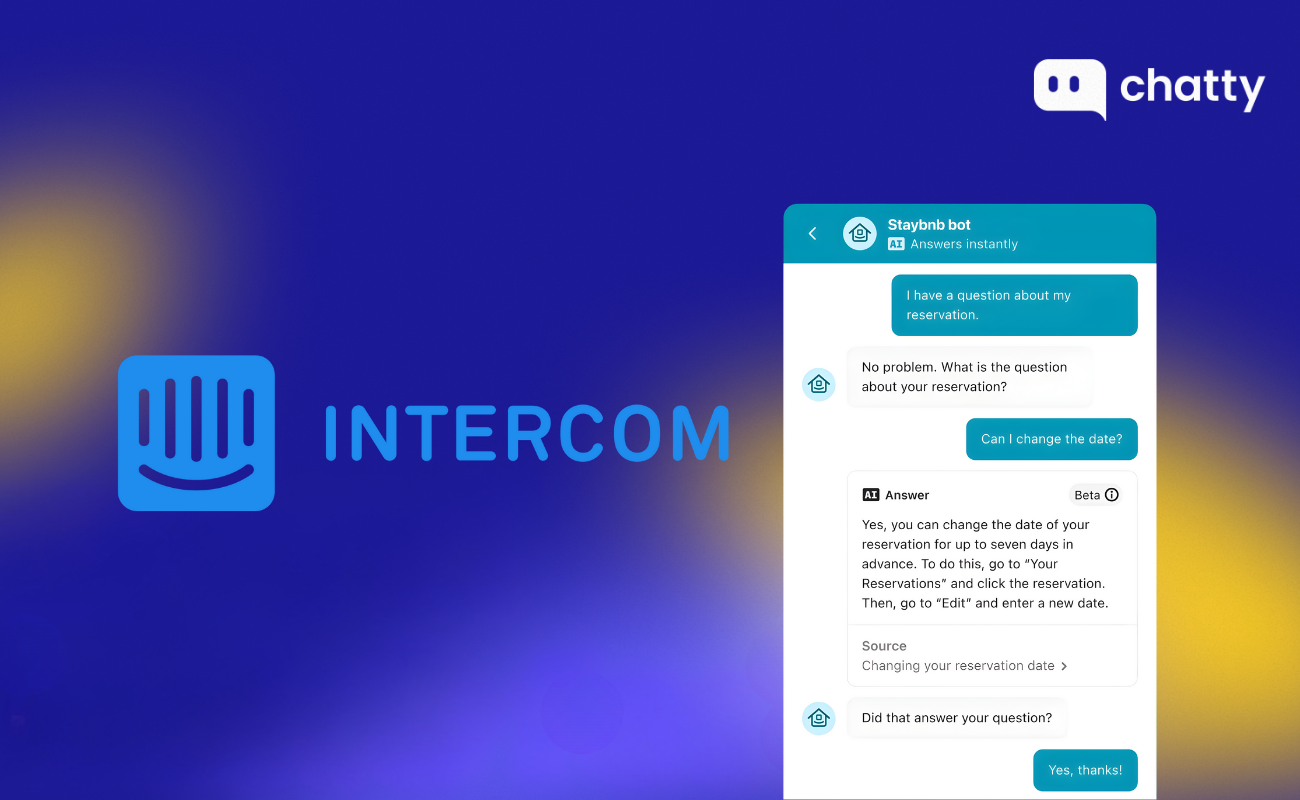
Intercom goes beyond live chat since it acts as a central nervous system for customer engagement. Its AI bot Fin collects lead data, qualifies intent, and triggers automated workflows, while your human team focuses on high-value conversations.
Best for: Product-led and support-heavy teams already using Intercom who want to combine chat, help center, and automation in one connected experience.
Standout features:
- Automated qualification prompts: Identify buying signals early with tailored, logic-based questions.
- Salesforce handoff: Push qualified leads and contextual chat history directly into CRM pipelines.
- Fin, the modern AI agent: Handles FAQs, product inquiries, and triage instantly, freeing human agents for complex cases.
4) HubSpot Chatflow: CRM-native chatbot that turns chats into a pipeline

HubSpot Chatflow gives teams a native way to turn conversations into qualified deals without ever leaving their CRM. Whether rule-based or powered by simple AI, it engages visitors, captures details, books meetings, and writes directly into HubSpot contacts and workflows. The entire flow feels frictionless because it’s built inside the same ecosystem marketers already use daily.
Best for: Teams that run their sales and marketing through HubSpot and want a plug-and-play chatbot that’s easy to deploy, track, and optimize.
Standout features:
- Native CRM integration: Every chat, lead, and booking is instantly logged, keeping data unified across campaigns.
- Built-in meeting scheduling: Connects with HubSpot Calendar so visitors can book demos on the spot.
- Free builder tier: Start building and testing conversation flows without needing an external tool.
5) Manychat: Social DM automation for lead capture at scale

In the world of social commerce, Manychat turns DMs into a revenue channel. It automates customer conversations across Instagram, WhatsApp, and Messenger, handling everything from comment-to-DM flows to ad click-to-chat campaigns. For brands that rely on social engagement, it’s like having a 24/7 sales assistant inside every inbox.
Best for: DTC brands, creators, and SMBs driving traffic from Instagram, Facebook, or WhatsApp who need conversational funnels that convert followers into leads.
Standout features:
- Visual flow builder: Design message paths intuitively, no code required.
- Meta-approved automation: Complies with Facebook and Instagram policies while scaling outreach safely.
- Ad-to-chat campaigns: Turn social clicks into live conversations that capture leads directly within the DM thread.
Guide to build a lead generation chatbot
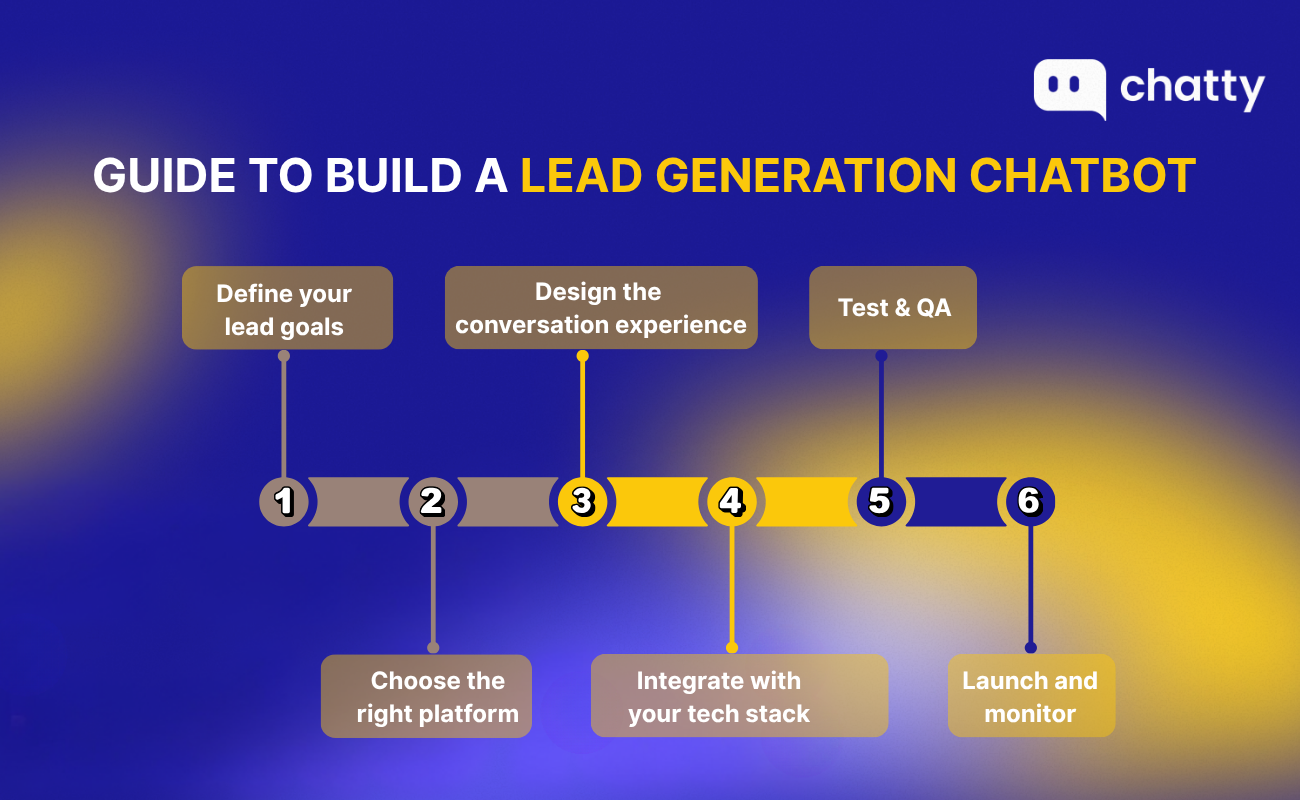
Step 1: Define your lead goals
Before you build a chatbot, you need clarity on what success looks like. A well-defined goal keeps your bot focused not just on chatting, but on converting.
Start by deciding what kind of leads you want to generate:
- High volume: if you’re optimizing for top-of-funnel reach.
- High quality: if you’re targeting ready-to-buy prospects.
- Sales-ready: if your sales cycle is short and speed matters most.
Then, set measurable KPIs to track progress:
- Conversion rate
- Qualified-lead percentage
- Average response time
- Cost per lead
Use these numbers to form hypotheses you can later test. For example: “Asking about budget earlier may reduce unqualified leads by 15%.” By defining your goals upfront, you create a roadmap that tells your chatbot exactly who to engage, what to ask, and how to measure success.
Step 2: Choose the right platform
Once you know your goals, the next step is selecting the platform that will power your chatbot. The right tool determines what’s possible, from AI accuracy to data integration.

Look for a platform that supports:
- AI /NLP for understanding natural conversations.
- CRM integrations for syncing lead data in real time.
- Logic branching to personalize flows based on responses.
Some trusted options include Chatty for Shopify-first stores, Drift for B2B SaaS, Intercom for product-led teams, and HubSpot Chatflows for all-in-one CRM setups.
Finally, consider scalability: can it handle multiple channels and languages as your business grows? A good platform should expand with you, not limit you.
Step 3: Design the conversation experience
The next task is to shape how your chatbot actually talks. A well-designed conversation feels natural, purposeful, and unmistakably on-brand.
Start by mapping the journey. Sketch out how a visitor enters the chat, what paths they might take, and where each flow should lead, whether that’s product discovery, sign-up, or booking a demo.
Then, refine the tone of voice to mirror your brand:
- Friendly and approachable for lifestyle brands
- Expert and concise for B2B solutions
- Playful and witty for consumer products
When writing prompts, focus on clarity and warmth. Replace robotic phrasing like “Please input your query” with human language, such as “Hey there! What can I help you find today?” Keep sentences short, use natural transitions, and add micro-affirmations (“Got it,” “Sure thing,” “That makes sense”) to make the flow feel alive.
Finally, test for clarity. Every question should have a reason; every reply should guide the visitor closer to the goal. A chatbot that sounds human earns the right to convert like one.
Step 4: Integrate with your tech stack
A chatbot becomes powerful only when it connects seamlessly to the tools you already use. Integration ensures that conversations turn into usable data and action.
To start:
- Map chatbot fields to CRM properties so each captured detail (name, email, intent) lands in the right database.
- Set automated triggers for lead scoring, nurture emails, or follow-up reminders.
- Link scheduling tools such as Calendly, Google Meet, or HubSpot Meetings to let prospects book time instantly.
This closed-loop system eliminates manual data entry, reduces response time, and gives your team full visibility into the buyer journey. When every chat syncs back to your CRM, your chatbot stops being a standalone widget and becomes part of your revenue engine.
Step 5: Test & QA
Before your chatbot greets its first visitor, make sure it can handle every kind of conversation. A solid QA process is what separates a working bot from a trustworthy one.

Start by running dry tests across different scenarios like normal conversations, skipped questions, and even nonsense inputs. Your goal is to see how the bot reacts when things don’t go as planned.
Next, stress-test the experience:
- Error handling: Does the chatbot recover gracefully when it doesn’t understand a query?
- Fallback behavior: Are users guided back to the right flow instead of hitting a dead end?
- Mobile experience: Test responsiveness, load time, and button layout on smaller screens.
Finally, validate that all captured data syncs correctly with your CRM. A single mismatch in fields or a missing value can break your automation later. Catching those issues now saves hours of manual fixes post-launch.
Step 6: Launch and monitor
Once testing is complete, don’t launch everywhere at once; start small. Start with one high-traffic page or a defined audience segment. This controlled rollout gives you cleaner insights without risking your full pipeline.
Monitor performance like you would any campaign:
- Conversation length reveals engagement depth.
- Drop-off points pinpoint friction.
- Completion rates show whether chats drive conversions.
Use these insights for A/B testing: experiment with greetings, CTAs, tone, and flow order. Even subtle shifts in question phrasing can raise completion by double digits.
Remember, a chatbot isn’t a set-and-forget tool. It’s a living asset that improves through observation. Launch small, learn fast, and iterate continuously. That’s how good chatbots become great ones.
Emerging trends in lead gen chatbots (2026 and beyond)
The next generation of lead generation chatbots will go far beyond scripted automation. As AI grows more sophisticated, the gap between human and machine conversation continues to close, reshaping how businesses capture and qualify demand.

- AI-powered sales agents: Chatbots like Chatty evolve from FAQ bots into autonomous reps trained on full catalogs and policies. They recommend bundles, handle objections, and progress a buyer through steps that used to require a human.
- Hybrid human + AI models: As bots take the repetitive work, humans focus on high-stakes moments (pricing nuances, enterprise terms). The handoff gets smarter because the bot carries context forward.
- Voice and multimodal chat: Once the “who” and “when” are routed, the “how” broadens: users speak, share screenshots, or scan products. Rich inputs reduce friction and surface intent faster than text alone.
- Predictive lead scoring: With deeper signals (voice sentiment, click paths, content viewed), models prioritize outreach before visitors drop off. Sales teams engage the right prospects at the right time, with the right angle.
- Conversational commerce & cross-channel identity: All of the above compounds when a user’s session follows them across web, social, and messaging. Conversations resume where they left off, carts persist, and offers stay consistent, turning a series of touches into one continuous dialogue.
Final thought
Modern lead generation chatbots are about timing, context, and connection. The most successful brands no longer wait for customers to initiate contact; they start the conversation first. When every interaction is instant, relevant, and human in tone, leads arrive informed and ready to buy. The goal isn’t to automate selling, it’s to make every exchange count.